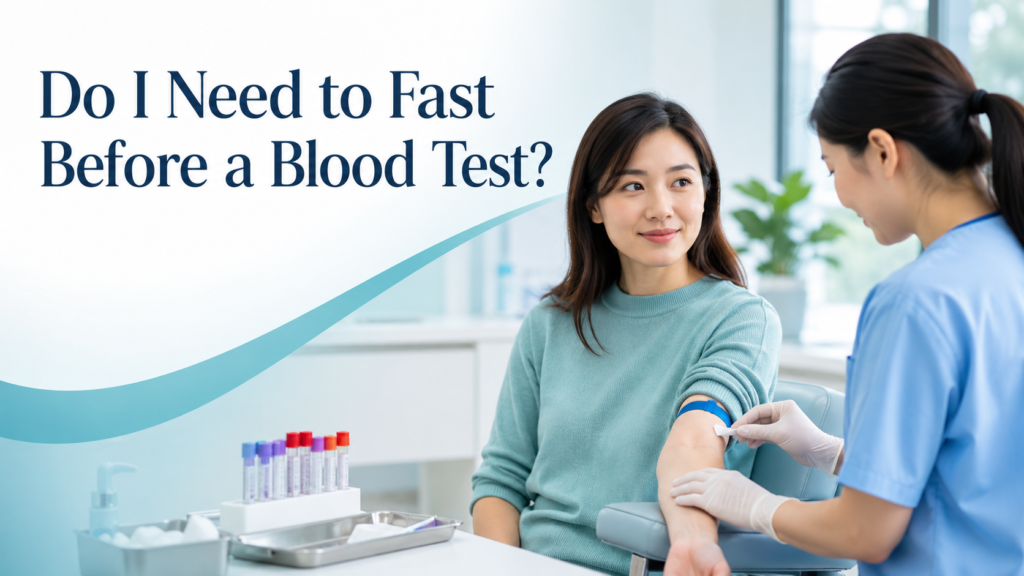
Do you need to fast before a blood test? Not always. Some blood tests require fasting, while many others can be performed without changing your usual eating routine. Whether fasting is needed depends on the tests requested and the instructions given by your doctor or clinic.
If fasting is required, you will usually be asked to avoid food and drinks other than plain water for a specific number of hours before the test. For many fasting blood tests, this is commonly around 8 to 12 hours, although the exact duration depends on the type of test.
The safest approach is to confirm your preparation instructions before attending.
Why might you need to fast before a blood test?
After you eat or drink, nutrients such as sugar and fats are absorbed into your bloodstream. This can temporarily change the levels measured in certain blood tests.
Fasting gives the doctor a clearer baseline for interpreting selected results. However, fasting when it is not required can also affect some results, so patients should not fast unless they have been instructed to do so.
Which blood tests may require fasting?
Tests that may sometimes require fasting include:
- Fasting blood glucose
- Cholesterol and triglyceride tests
- Selected metabolic tests
- Certain liver or kidney function tests
However, the requirement can differ depending on the exact test, the laboratory method and the reason the test was ordered.
For example, not every glucose or cholesterol test requires fasting. Your doctor or clinic should advise you based on the investigations selected.
How long should I fast before a blood test?
When fasting is required, patients are commonly instructed to fast for approximately 8 to 12 hours.
A morning appointment is often more convenient because most of the fasting period takes place overnight.
Example:
If your test is scheduled for 8:00 AM and you have been instructed to fast for eight hours, you would normally stop eating from midnight.
Always follow the exact timing provided by the clinic rather than estimating it yourself.
Can I drink water during fasting?
Plain water is generally permitted during a fasting blood test unless the clinic gives you different instructions.
Staying hydrated may also make the blood-drawing process easier because dehydration can make veins more difficult to access.
Avoid:
- Coffee, including black coffee
- Tea
- Juice
- Soft drinks
- Flavoured water
- Milk
- Alcohol
These drinks may affect some test results.
Can I take my usual medication?
Do not stop prescribed medication unless your doctor or healthcare provider advises you to do so.
Some medicines, supplements and vitamins may affect certain laboratory results or may need to be taken with food. Patients should inform the clinic about:
- Prescription medicines
- Over-the-counter medicines
- Vitamins
- Herbal products
- Health supplements
Ask the clinic for specific instructions before the test, especially if you take medication for diabetes, blood pressure or other ongoing conditions.
Can I smoke, chew gum or exercise while fasting?
It is generally advisable to avoid smoking, chewing gum and strenuous exercise during the fasting period because these activities may affect digestion or certain measurements.
Try to rest normally and attend the clinic at the arranged time.
What if I accidentally eat or drink?
Tell the clinic before your blood is taken.
Do not hide it or assume the test will still be accurate. Depending on the test, the doctor may:
- Proceed and interpret the result accordingly
- Change the tests performed
- Ask you to return on another day
Informing the clinic prevents avoidable confusion or the need to repeat testing later.
Who should be more careful about fasting?
Fasting may require additional planning for:
- People with diabetes
- Pregnant patients
- Older adults
- Children
- Patients taking medication that must be taken with food
- Anyone with a history of dizziness or fainting
These patients should confirm the instructions with a doctor before fasting.
What should I bring for my blood test?
Bring:
- NRIC or passport
- Panel card or panel app, where applicable
- Doctor’s request form, if you have one
- List of current medicines and supplements
- Previous laboratory results, where relevant
You may also bring a light snack to eat after the blood draw, particularly if you tend to feel light-headed after fasting.
Where can I arrange a blood test in Subang Jaya or Taman Megah?
Klinik Central provides selected blood tests and health-screening services at its branches in:
Klinik Central SS15 Subang Jaya Branch
- Monday–Saturday: 8:00 AM–9:00 PM
- Sunday: 8:00 AM–4:00 PM
Klinik Central Taman Megah PJ Branch
- Monday: Closed
- Tuesday, Wednesday and Saturday: 8:00 AM–4:00 PM
- Thursday and Friday: 8:00 AM–9:00 PM
- Sunday: 10:00 AM–7:00 PM
Blood-test availability and fasting requirements depend on the tests selected. Patients are encouraged to contact the preferred branch before attending.