Acute gastroenteritis, often called cirit-birit or stomach flu, is an infection of the stomach and intestines that causes sudden diarrhoea, vomiting and stomach cramps. Most cases get better on their own within a few days. The real danger is dehydration, which can become serious quickly in babies, young children and older adults.
The risk rises at this time of year. The monsoon brings floods that can contaminate water, and the festive season brings open houses where food may sit out for hours. This guide explains the warning signs that mean you should see a doctor, how to care for gastroenteritis at home, and the simple steps the Ministry of Health Malaysia (KKM) recommends to prevent it.
Gastroenteritis and Food Poisoning in Malaysia: The Numbers
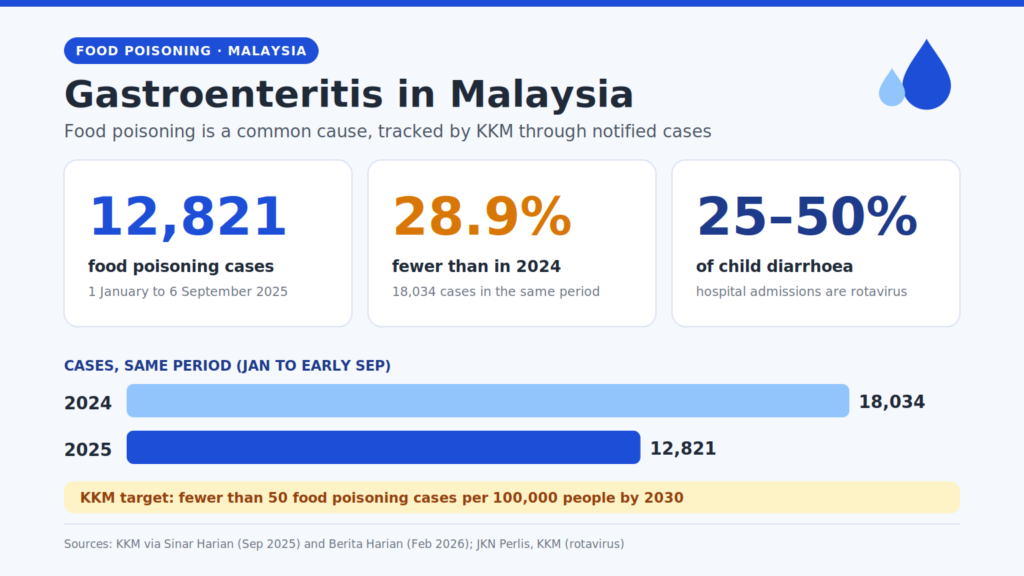
Food poisoning is one of the most common causes of gastroenteritis, and KKM tracks it closely. Malaysia recorded 12,821 food poisoning cases from January to 6 September 2025, down 28.9% from 18,034 cases in the same period of 2024.
| Key figure | Value |
| Food poisoning cases, Jan to 6 Sep 2025 | 12,821 |
| Same period in 2024 | 18,034 |
| Change | 28.9% fewer cases |
| KKM’s 2030 target | Fewer than 50 food poisoning cases per 100,000 people |
| Share of child diarrhoea hospital admissions caused by rotavirus | About 25% to 50% |
In children, rotavirus is the leading cause of diarrhoea that needs hospital treatment in Malaysia, usually for fluids through a drip. KKM has not yet published a full-year national total for 2026.
What Causes Gastroenteritis and How Does It Spread?
Gastroenteritis is usually caused by a virus, but bacteria and parasites can also cause it.
• Viruses are the most common cause, especially in children. Rotavirus mainly affects children under 5, most often between 3 months and 2 years old.
• Bacteria such as Salmonella and E. coli are common causes of food poisoning. They multiply quickly in food left at room temperature, between 5°C and 60°C.
Gastroenteritis spreads by the faecal-oral route. Germs from stool reach the mouth through unwashed hands, contaminated food or water, shared toys, or surfaces such as door handles and changing tables. Changing a baby’s diaper and then touching food without washing your hands is a common way it spreads at home.
KKM also lists acute gastroenteritis among the water- and food-borne diseases to watch for during floods, along with food poisoning, cholera, typhoid and hepatitis A.
Common Symptoms of Gastroenteritis
Symptoms usually start suddenly, often within a day or two of infection. For rotavirus, symptoms typically appear about 2 days after exposure.
• Watery diarrhoea, often several times a day
• Nausea and vomiting
• Stomach pain or cramps
• Fever
• Tiredness and loss of appetite
Food poisoning causes similar symptoms: stomach pain, diarrhoea, vomiting and fever. A strong clue is when several people fall ill after eating the same meal.
Gastroenteritis: 6 Warning Signs You Need a Doctor
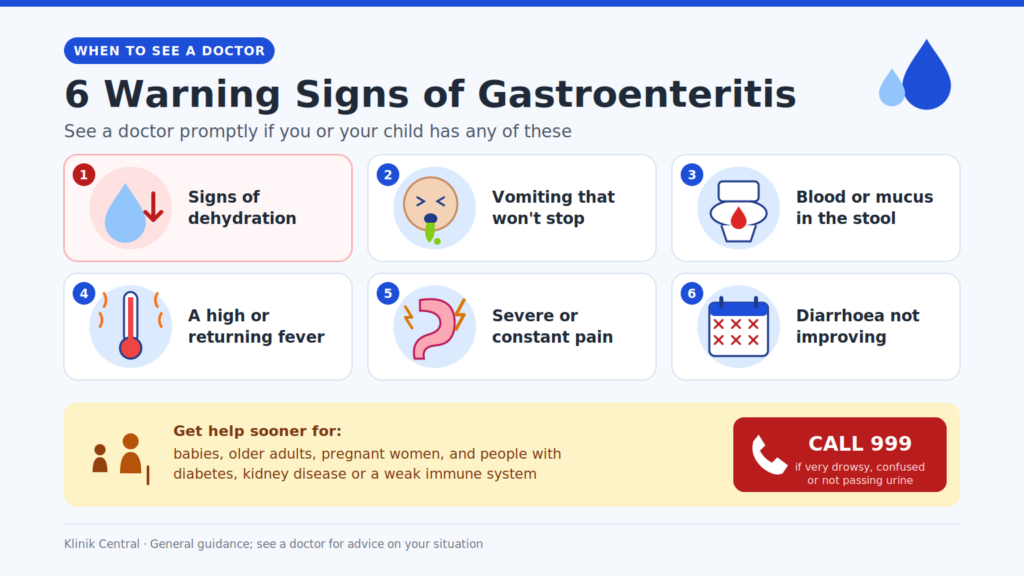
Most people can recover at home, but see a doctor promptly if you or your child has any of these:
1. Signs of dehydration (see the table below). This is the most important warning sign.
2. Vomiting that will not stop, or being unable to keep any fluids down.
3. Blood or mucus in the stool.
4. A high fever, or a fever that keeps coming back.
5. Severe or constant stomach pain.
6. Diarrhoea that is not improving after a couple of days, or is getting worse.
Get help even sooner for babies, older adults, pregnant women, and anyone with diabetes, kidney disease or a weak immune system. These groups become dehydrated faster.
Signs of dehydration
| Babies and young children | Older children and adults |
| Fewer wet diapers or less urine | Passing little urine, or dark urine |
| No tears when crying | Very thirsty, dry mouth |
| Dry lips and tongue | Dizziness, especially when standing up |
| Sunken eyes | Feeling weak or very tired |
| Sunken soft spot on the head (babies) | Fast heartbeat |
| Unusually sleepy, floppy or fussy | Confusion (an emergency) |
Children’s signs: JKN Perlis, KKM.
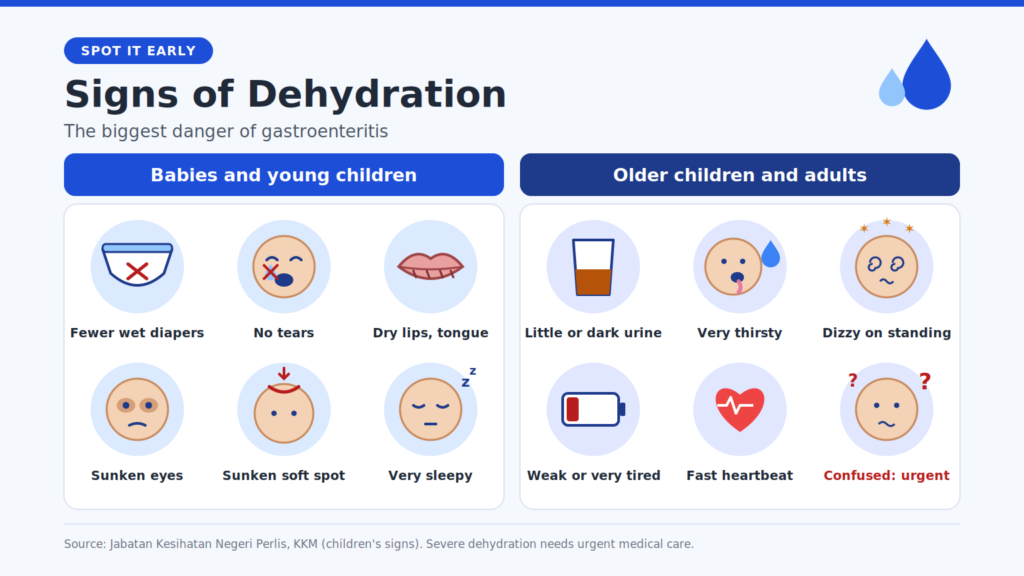
Severe dehydration can damage the kidneys and can be fatal if not treated quickly. If a child is very drowsy, hard to wake, or has not passed urine for many hours, go to the emergency department or call 999.
How to Treat Gastroenteritis at Home
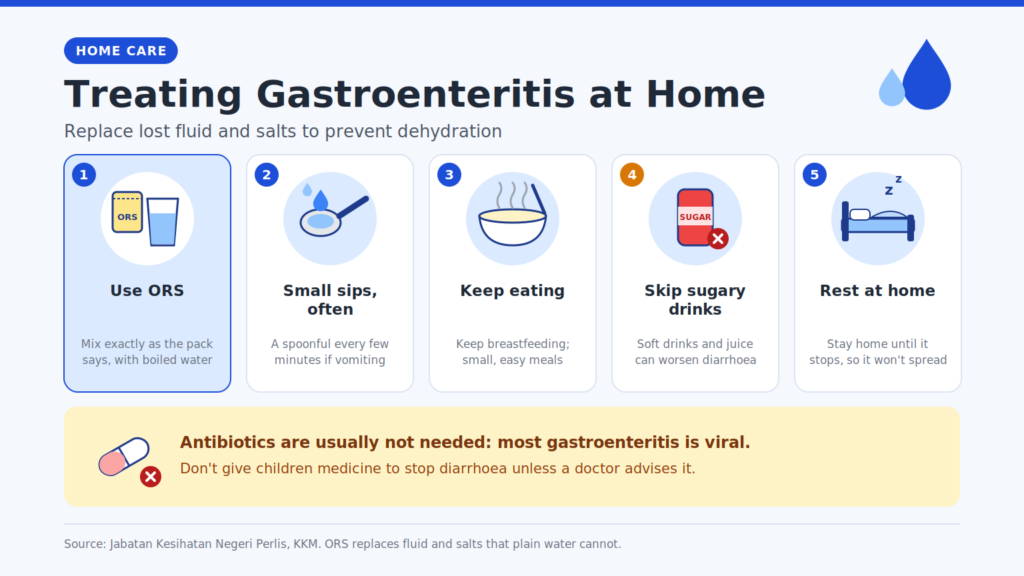
The main goal is to replace the water and salts lost through diarrhoea and vomiting. There is no medicine that kills rotavirus, so treatment focuses on preventing dehydration.
- Use oral rehydration salts (ORS). ORS replaces both fluid and the salts your body has lost, which plain water alone cannot do. Mix it exactly as the pack says, using clean, boiled water. Do not make it weaker or stronger, and do not mix it into milk or formula.
- Drink small amounts often. If you or your child is vomiting, give a spoonful or a small sip every few minutes instead of a large drink at once.
- Keep eating and breastfeeding. Continue breastfeeding babies. Once vomiting settles, return to normal, easy-to-digest meals in small portions.
- Avoid sugary drinks. Soft drinks, fruit juice and sports drinks are high in sugar and can make diarrhoea worse.
- Rest and keep apart. Stay home from work, school or nursery until the diarrhoea and vomiting have stopped, so you don’t spread it to others.
Antibiotics are usually not needed, because most gastroenteritis is caused by viruses. Do not give children medicines to stop diarrhoea unless a doctor advises it. Your doctor will decide if any medicine is needed after examining you.
How to Prevent Gastroenteritis
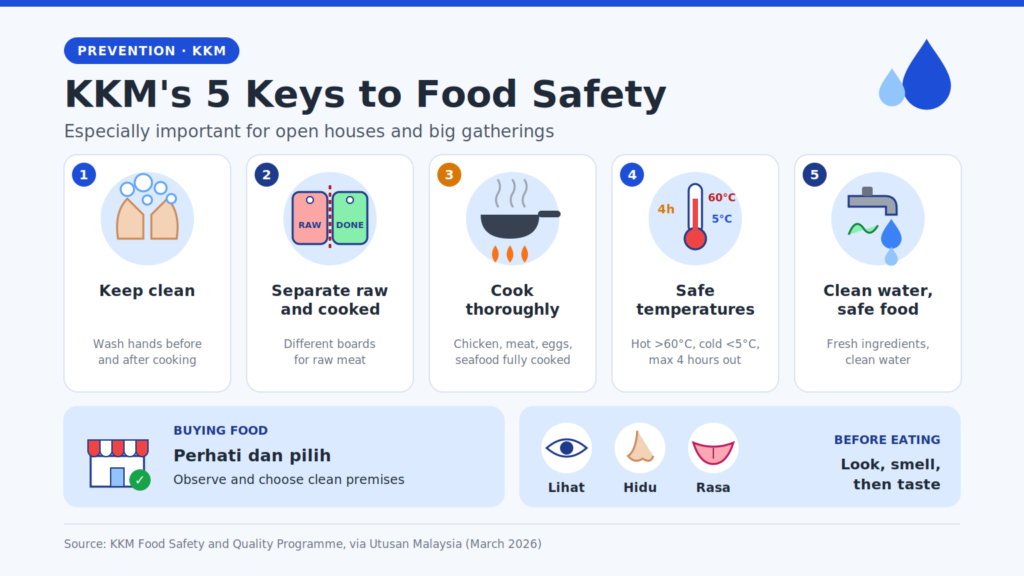
KKM’s five keys to food safety
KKM’s Food Safety and Quality Programme recommends five keys to safer food at home, especially when cooking for many guests:
1. Keep clean. Wash your hands before and after handling food, and keep utensils and the kitchen clean.
2. Separate raw and cooked food. Use separate chopping boards, knives and containers for raw chicken or meat.
3. Cook thoroughly. Make sure chicken, meat, eggs and seafood are fully cooked.
4. Keep food at safe temperatures. Keep hot food above 60°C and cold food below 5°C. Do not leave cooked food at room temperature for more than 4 hours.
5. Use clean water and safe raw ingredients. Choose fresh ingredients and wash and prepare food with clean water.
When buying ready-made food for open houses, KKM suggests the perhati dan pilih (observe and choose) approach: choose clean premises. Before eating, use lihat, hidu, rasa (look, smell, taste) to check that food is still safe.
During floods
Drink only boiled water and eat clean food. Throw away any food that has touched flood water, has been at room temperature for more than 4 hours, or has changed in taste, smell or texture.
Handwashing and hygiene at home
Wash your hands with soap after using the toilet and after changing diapers. Clean children’s toys and play areas regularly, because rotavirus spreads easily through contaminated hands, toys and surfaces.
Rotavirus vaccine for babies
The World Health Organization(WHO) recommends rotavirus vaccination to prevent severe diarrhoea in young children. In Malaysia, the vaccine is not part of the National Immunisation Programme, but it is available at private clinics and hospitals. It is an oral vaccine, given by mouth, and the first dose can be given from 6 weeks of age. Ask your doctor about the schedule for your baby, because the doses must start early.
Feeling Unwell? We’re Here to Help!
Most gastroenteritis gets better with rest and plenty of ORS, but dehydration can sneak up quickly, especially in children and older family members. If you notice any warning signs, or you are simply unsure, see a doctor early. We can check for dehydration, find the likely cause and advise on the right treatment. Parents can also ask us about rotavirus vaccination for their baby.
Come and consult with our doctor at Klinik Central, SS15 and Taman Megah!
Frequently Asked Questions
What is the difference between gastroenteritis and food poisoning? Gastroenteritis is inflammation of the stomach and intestines from any infection, most often a virus. Food poisoning is gastroenteritis caught from contaminated food or drink. The symptoms are similar.
How long does gastroenteritis last? Most cases improve within a few days. See a doctor if symptoms are not improving after a couple of days, or if any warning signs appear.
Is plain water enough when I have diarrhoea? Oral rehydration salts (ORS) are better than plain water, because they replace both the fluid and the salts your body loses. Mix ORS exactly as the pack says.
Do I need antibiotics for gastroenteritis? Usually not. Most gastroenteritis is caused by viruses, which antibiotics do not treat. Your doctor will decide if you need medicine.
Is gastroenteritis contagious? Yes. It spreads through unwashed hands, contaminated food or water, and shared surfaces. Washing your hands with soap after using the toilet or changing diapers is the best protection.
Is the rotavirus vaccine free in Malaysia? No. The rotavirus vaccine is not part of Malaysia’s National Immunisation Programme, but it is available at private clinics and hospitals from 6 weeks of age.
When should I take my child to a doctor for diarrhoea? See a doctor if your child shows signs of dehydration, keeps vomiting, has blood in the stool, has a high fever or seems unusually sleepy. Babies need to be seen sooner.
References
• Jabatan Kesihatan Negeri Perlis, KKM. Awas Serangan Rotavirus Pada Anak: 6 Fakta Ini Sangat Penting
• Jabatan Kesihatan Negeri Perlis, KKM. Jadual Imunisasi Bayi, Kanak-kanak dan Remaja
• Zailina Abdul Majid, Deputy Director-General of Health (Food Safety and Quality), KKM. Keselamatan makanan: Tanggungjawab bersama di Aidilfitri. Utusan Malaysia, 14 March 2026