Leptospirosis, better known in Malaysia as kencing tikus (rat urine disease), is a bacterial infection that spreads through water and soil contaminated by infected animals. It is endemic in Malaysia and is the third most fatal infection in the country after dengue and malaria.
The risk rises with the monsoon. Heavy rain, floods and stagnant water bring people into contact with contaminated water, often without realising it. The early symptoms look like the flu, so many people delay seeing a doctor. This guide covers the latest case numbers in Malaysia and Selangor, the warning signs to watch for, and the steps the Ministry of Health Malaysia (KKM) recommends to stay safe.
Leptospirosis Cases in Malaysia and Selangor: The Latest Numbers
Leptospirosis has been a notifiable disease in Malaysia since 2010, so every probable and confirmed case must be reported to the district health office. Between 2011 and 2022, the national incidence ranged from 13 to 17 cases per 100,000 population, which is higher than in neighbouring Thailand and the Philippines.
Selangor
| Selangor figure | Value | Period |
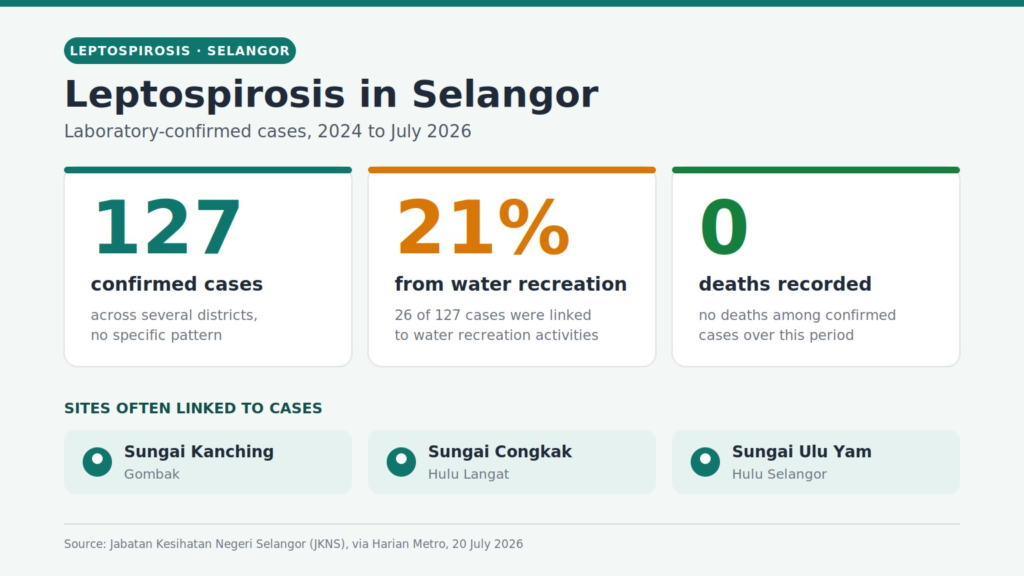
| Laboratory-confirmed cases | 127 | 2024 to July 2026 |
| Cases linked to water recreation | 26 (21%) | 2024 to July 2026 |
| Deaths | 0 | 2024 to July 2026 |
| Peak incidence | 24.68 per 100,000 | 2013 |
| Probable and confirmed cases | 1,352, with 14 deaths | 2013 |
Three water recreation sites in Selangor that are often linked to cases: Taman Eko Rimba Sungai Kanching in Gombak, Sungai Congkak waterfall in Hulu Langat, and Sungai Ulu Yam in Hulu Selangor. JKNS found no specific distribution pattern across districts.
Malaysia
| National figure | Value | Period |
| Incidence rate | 13 to 17 per 100,000 | 2011 to 2022 |
| Notified cases | 4,457 | 2013 |
| Notified cases | 3,665 | 2012 |
| Case fatality rate | 1.47% | 2012 to 2013 |
Who it hits, and how hard
A study of all 764 registered cases in Perak in 2024 gives the clearest recent picture of who gets leptospirosis and how serious it can be:
• 3 in 4 patients (75.5%) needed hospital admission.
• Two-thirds of patients (67.8%) were male, with an average age of 32.
• 42% had a history of recreational activity in the 21 days before falling ill.
• Students (30.1%) and pensioners (29.3%) were the largest groups.
• Patients diagnosed later were more likely to be hospitalised. Each extra day from symptom onset to diagnosis raised the odds by about 37%.
Outbreaks in 2026
In May 2026, KKM reported a suspected outbreak at a recreational park in Kuala Pilah, Negeri Sembilan. All four people affected had fever, headache and muscle pain after water activities there. One was admitted to hospital, and the park was closed from 10 to 17 May for cleaning.
What Is Leptospirosis and How Does It Spread?
Leptospirosis is a zoonotic disease, meaning it passes from animals to people. It is caused by Leptospira bacteria.
People become infected when water, soil or food contaminated by infected animals touches a cut in the skin or the mucous membranes of the eyes, nose or mouth. It can also spread by swallowing contaminated water or food. Rats are the main carrier, but cats, dogs, cattle, pigs, rabbits and horses can also carry the bacteria.
Symptoms usually appear 2 to 30 days after exposure. Leptospirosis does not spread directly from person to person.
7 Warning Signs of Leptospirosis
KKM lists these symptoms of leptospirosis infection:
1. Fever
2. Chills
3. Body or muscle aches
4. Headache
5. Dry cough (a cough without phlegm)
6. Nausea and vomiting
7. Diarrhoea
These early symptoms look like the flu or dengue, which is why leptospirosis is easy to miss. The key clue is recent exposure. If you have any of these symptoms within a month of wading through flood water, swimming in a river or waterfall, or cleaning drains, tell your doctor.
In the 2024 Perak study, patients with vomiting were 11 times more likely to need hospital admission, and patients with headache were more than 4 times as likely.
Who Is Most at Risk?
Anyone exposed to contaminated water or soil can get leptospirosis. Malaysian data point to these higher-risk groups:
• Visitors to rivers, waterfalls and recreational forests. In Selangor, 21% of confirmed cases from 2024 to July 2026 were linked to water recreation.
• People cleaning up after floods or wading through flood water and puddles.
• Farmers and agricultural workers, who had 5 times higher odds of hospital admission in the Perak study.
• Students, who made up 30% of cases in Perak and often join outdoor activities or clean-ups without protection.
• Pensioners, who made up 29% of cases and were among the most likely to be hospitalised.
• Workers in drains, sewers, wet markets and animal handling.
Leptospirosis Prevention: 6 KKM-Backed Steps
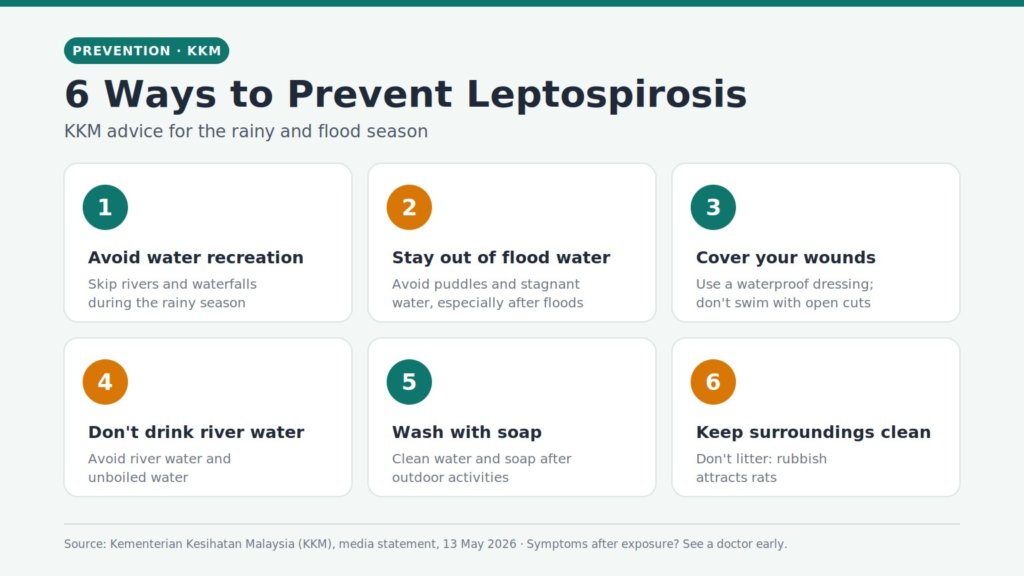
These are the steps KKM advises the public to take:
1. Avoid water recreation areas during the rainy season. Rivers, waterfalls and recreational ponds carry a higher risk when it rains.
2. Stay out of puddles and stagnant water, especially after floods. Do not let children play in flood water.
3. Cover any cuts with a waterproof dressing. Avoid swimming or playing in water at all if you have an open wound.
4. Do not drink or use river water or unboiled water.
5. Wash your hands with clean water and soap, especially after outdoor activities or touching soil.
6. Keep your surroundings clean and do not litter. Rubbish attracts rats, the main carrier of the disease.
If you visit a recreation site, keep good hygiene during your visit, and get checked at a nearby health facility if you develop symptoms afterwards.
You can have a look at Dengue Warning Signs: When Should You See a Doctor? to understand more about other infectious diseases and what to do next!
When to See a Doctor
See a doctor straight away if you develop fever or any of the warning signs after contact with flood water, rivers, soil or animals. KKM advises getting treatment at the nearest health facility if symptoms appear after visiting a recreation area..
Early treatment matters. Leptospirosis can progress to serious complications, including sepsis, meningitis, bleeding in the lungs, Weil’s syndrome (kidney and liver failure with jaundice), and multi-organ failure.
What to expect at the clinic:
• Tell the doctor about any water, soil or animal exposure in the past month. This history is often the biggest clue.
• Your doctor may order blood tests. The IgM antibody test usually turns positive 5 to 10 days after symptoms start, and the confirmatory MAT test 10 to 12 days after.
• Leptospirosis is treated with antibiotics prescribed by a doctor. Do not self-medicate.
• Doctors must notify every probable or confirmed case to the district health office (PKD) under the Prevention and Control of Infectious Diseases Act 1988.
Go to the emergency department or call 999 if someone has yellowing of the eyes or skin, difficulty breathing, coughing up blood, very little urine, confusion or drowsiness.
Frequently Asked Questions
Is leptospirosis common in Malaysia? Yes. Leptospirosis is endemic in Malaysia, with an incidence of 13 to 17 cases per 100,000 population between 2011 and 2022. It is the third most fatal infection in the country after dengue and malaria.
How many leptospirosis cases are there in Selangor? The Selangor State Health Department reported 127 laboratory-confirmed cases from 2024 to July 2026, with no deaths. About 21% were linked to water recreation.
How long after exposure do leptospirosis symptoms appear? According to KKM, symptoms appear 2 to 30 days after exposure to contaminated water, soil or food.
Can leptospirosis spread from person to person? No. People catch it from water, soil or food contaminated by infected animals, mainly rats.
Is it safe to swim at waterfalls during the rainy season? KKM advises avoiding water recreation areas during the rainy season because of the higher risk of leptospirosis. Never swim with an uncovered wound.
Can leptospirosis be cured? Yes. It is treated with antibiotics prescribed by a doctor. The earlier treatment starts, the lower the risk of hospital admission and serious complications.
Stay Safe This Monsoon
Leptospirosis is preventable, and it is treatable when caught early. Avoid flood water and rivers during the rainy season, cover any cuts, and don’t brush off a fever that follows water exposure. If you or a family member feels unwell after a flood, a river trip or a clean-up, book a check-up with our doctors at Klinik Central SS15 and Taman Megah branches today.
References
• Kementerian Kesihatan Malaysia. Kenyataan Media: Wabak Disyaki Leptospirosis (Kencing Tikus) di Kuala Pilah, Negeri Sembilan (13 May 2026)
• Harian Metro. JKNS nafikan dakwaan kes kencing tikus di kawasan rekreasi air sekitar Selangor (20 July 2026)
• Philip N, Ahmed K.Leptospirosis in Malaysia: current status, insights, and future prospects. J Physiol Anthropol 2023; 42(1): 30
• Identifying leptospirosis hotspots in Selangor (PMC, 2025)
• Leptospirosis incidence and mortality in Malaysia (PubMed)
• Ministry of Health Malaysia. Guidelines for the Diagnosis, Management, Prevention and Control of Leptospirosis in Malaysia, 1st edition (2011)