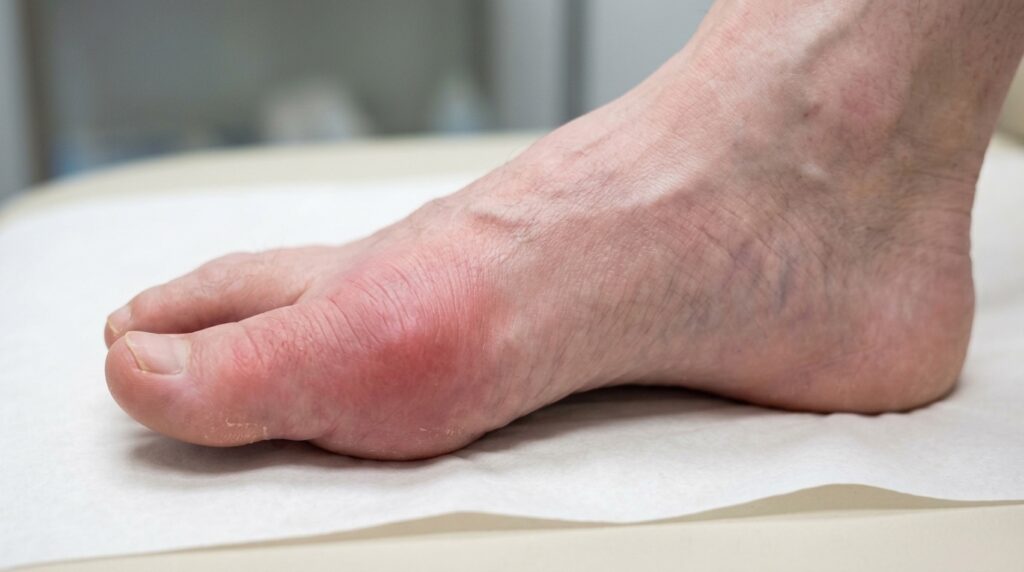
Gout is a type of arthritis caused by the buildup of monosodium urate crystals in and around the joints. It can cause sudden, severe joint pain, swelling, redness and warmth, commonly affecting the big toe, although other joints can also be involved. Managing gout involves more than simply treating pain when an attack happens. There are two important parts of gout management: treating a gout flare promptly and, when indicated, lowering uric acid over the long term to reduce the risk of future flares and complications.
What Is a Gout Flare?
A gout flare is a sudden episode of inflammation caused by urate crystals in a joint. Pain can develop rapidly and may become severe within a short period. The affected joint may become swollen, red, warm and very tender.
The big toe is a common site, but gout can also affect the ankle, knee, foot, wrist, fingers and other joints.
A gout flare usually settles within 1–2 weeks, although the duration can vary between individuals.
Because several conditions can cause sudden joint inflammation, gout should not be diagnosed based on a high uric acid result alone. Septic arthritis, for example, is an important condition that needs to be considered when someone develops an acutely painful, swollen joint.
How to Manage a Gout Flare Effectively
The main goal during a gout flare is to control inflammation and pain as early as possible.
According to the Malaysian MOH CPG, treatment options for an acute gout flare include:
- Colchicine
- Non-steroidal anti-inflammatory drugs (NSAIDs) or COX-2 inhibitors
- Corticosteroids
These may be used individually, while combinations may sometimes be considered when treatment with one medication does not provide sufficient relief. The choice depends on factors such as the patient’s other medical conditions, current medications and risk of side effects.
This is why it is important not to simply take someone else’s gout medication or use an old prescription without medical advice.
What About Uric Acid During a Flare?
A common misconception is that a normal uric acid level means the symptoms cannot be gout.
However, serum urate can be normal or lower than expected during an acute gout flare. If gout is still suspected, KKM guidance recommends that the uric acid level may be repeated at least two weeks after the flare has completely resolved.
How to Lower Uric Acid
Treating the pain of a gout flare is only one part of management.
For patients who need long-term treatment, urate-lowering therapy (ULT) is used to reduce serum urate and prevent future crystal formation and gout complications.
The Malaysian CPG recommends a treat-to-target approach, generally aiming for a serum urate level of:
<360 µmol/L (6 mg/dL)
A lower target of <300 µmol/L (5 mg/dL) may be considered in severe gout, such as gout with tophi, chronic gouty arthritis or frequent flares.
Is Allopurinol Used for Gout?
Yes. Allopurinol is the first-line urate-lowering treatment recommended by the Malaysian CPG when ULT is indicated.
It should generally be started at a low dose and increased gradually, with appropriate monitoring. Other medicines, such as febuxostat or uricosuric agents, may be considered when allopurinol is unsuitable or not tolerated.
Patients taking allopurinol should also be aware of potentially serious adverse reactions, including severe cutaneous adverse reactions (SCAR). Any concerning rash or symptoms after starting allopurinol should be assessed promptly by a healthcare professional.
Should You Stop Allopurinol During a Gout Flare?
If you are already taking urate-lowering therapy, do not stop or change it on your own just because a gout flare occurs.
The treatment of the flare and long-term uric acid management are separate parts of gout care. Your doctor can advise whether your current treatment needs adjustment and how the flare should be managed.
If you are not currently taking urate-lowering therapy, whether you should start it depends on your gout history, uric acid level, severity, kidney function, other medical conditions and other clinical factors.
Does High Uric Acid Always Mean Gout?
No.
Hyperuricaemia means that the level of uric acid in the blood is elevated, but having a high uric acid level alone does not establish a diagnosis of gout.
The KKM CPG specifically states that gout should not be diagnosed based on hyperuricaemia alone. Not everyone with hyperuricaemia will develop gout.
Similarly, the Malaysian CPG states that there is currently insufficient evidence to routinely recommend urate-lowering therapy for asymptomatic hyperuricaemia solely to prevent gout, slow chronic kidney disease progression or prevent cardiovascular events.
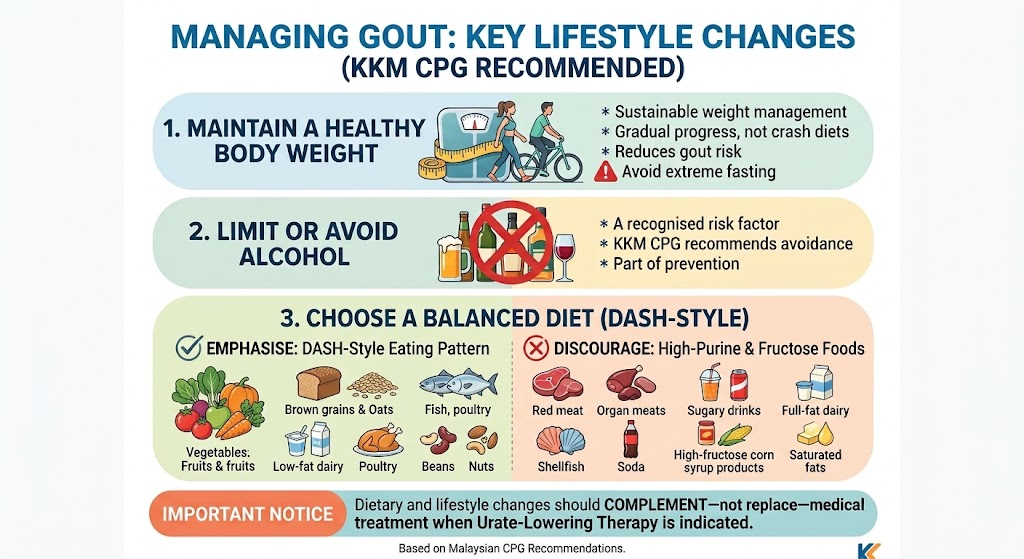
Lifestyle Changes That May Help Manage Gout
Medication is only one part of gout management. A healthy lifestyle can also help reduce gout risk.
The Malaysian CPG recommends:
Maintain a Healthy Body Weight
If you are overweight, gradual and sustainable weight management may help reduce the risk of gout.
Avoid crash diets or extreme fasting without medical advice.
Limit Alcohol
Alcohol consumption is a recognised risk factor for gout. The KKM CPG recommends avoiding alcohol as part of gout prevention.
Choose a Balanced Diet
A DASH-style eating pattern is recommended as part of gout prevention.
This emphasises foods such as:
- Vegetables and fruits
- Whole grains
- Low-fat or fat-free dairy products
- Fish and poultry
- Beans and nuts
- Vegetable oils
It also discourages excessive intake of foods high in purines, fructose-rich foods, full-fat dairy products and saturated fats.
Dietary changes should complement—not automatically replace—medical treatment when urate-lowering therapy is indicated.
You can read more on High Cholesterol: Can You Have It Even If You Look Healthy? For more information on how to choose a balanced diet!
How Can You Prevent Future Gout Flares?
Preventing recurrent flares involves looking at the underlying uric acid level, not just treating each painful episode.
Depending on your individual situation, your doctor may recommend:
- Checking your serum urate level.
- Reviewing your history of gout flares.
- Assessing kidney function and other medical conditions.
- Reviewing medications that may affect gout risk.
- Starting urate-lowering therapy when indicated.
- Gradually adjusting treatment towards the recommended urate target.
- Monitoring treatment response and possible medication side effects.
- Maintaining a healthy weight and following a balanced diet.
Some medications, including certain diuretics, can increase the risk of gout. Your doctor may consider an alternative where appropriate, but you should not stop prescribed medication without medical advice.
When Should You See a Doctor for Gout?
Consider seeing a doctor if you have:
- Sudden severe joint pain and swelling
- Repeated episodes of a painful, swollen joint
- Suspected gout for the first time
- Persistent or worsening symptoms despite treatment
- Frequent gout flares
- Known gout but difficulty controlling your uric acid
- Possible medication side effects
- A history of kidney disease or other conditions that may affect gout treatment
Urgent medical assessment is particularly important when a painful, swollen joint is accompanied by features that could suggest infection, because septic arthritis is an important differential diagnosis of an acute gout-like presentation.
Frequently Asked Questions About Gout
Is gout caused only by eating certain foods?
No. Diet is one factor, but gout is influenced by urate metabolism, genetics, body weight, medical conditions, medications and other factors. Lifestyle changes can help, but some patients also require medication.
Can I have gout if my uric acid is normal?
Yes. Serum urate may be normal or lower during an acute gout flare. If clinical suspicion remains high, the level may need to be repeated after the flare has resolved.
Is high uric acid the same as gout?
No. Hyperuricaemia does not automatically mean that a person has gout. Diagnosis should take the patient’s symptoms and clinical findings into account.
Do I need allopurinol if my uric acid is high?
Not necessarily. The decision to start urate-lowering therapy depends on whether gout is present and the individual’s clinical circumstances. KKM does not recommend routinely using urate-lowering therapy solely for asymptomatic hyperuricaemia.
What is the target uric acid level for gout?
The KKM CPG recommends a treat-to-target approach with serum urate generally below 360 µmol/L (6 mg/dL). A lower target may be considered in severe gout.
Can I stop my gout medicine when the pain goes away?
Do not stop prescribed urate-lowering medication on your own simply because the pain has improved. Long-term gout management is intended to control uric acid and reduce future crystal accumulation and flares. Discuss any medication changes with your doctor.
The Key Difference: Treating the Flare vs Treating the Uric Acid
Think of gout management in two parts:
During a gout flare:
The priority is to control inflammation and pain promptly.
Between flares:
The focus is on managing uric acid and preventing future attacks, when urate-lowering therapy is indicated.
Treating the pain alone may make you feel better temporarily, but long-term gout management may require addressing the underlying urate level as well.
If you have recurrent gout, unexplained joint swelling or persistently high uric acid, speak with a doctor about an appropriate assessment and treatment plan.
_______________________________________________________________________
At Klinik Central, SS15 and Taman Megah branches, we provide consultation and assessment for gout, joint pain and related health concerns.