High cholesterol can affect anyone — including people who are slim, physically active and appear completely healthy. Because it usually does not cause obvious symptoms, you may not know your cholesterol levels are elevated unless you have a blood test.
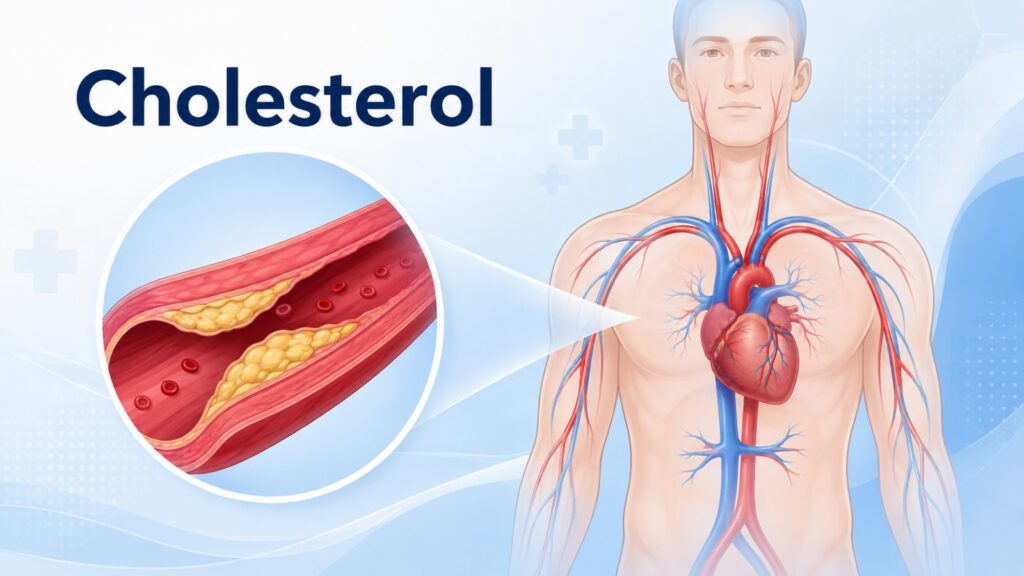
Over time, unhealthy cholesterol levels can contribute to the development of atherosclerosis, where fatty deposits build up in the arteries, increasing the risk of cardiovascular disease such as heart attack and stroke.
What Is High Cholesterol?
Cholesterol is a type of lipid that your body needs for normal functions. However, unhealthy levels of certain blood lipids can increase your cardiovascular risk.
A lipid profile commonly measures:
- LDL cholesterol (LDL-C): Often called “bad” cholesterol because higher levels are associated with atherosclerotic cardiovascular disease.
- HDL cholesterol (HDL-C): Commonly known as “good” cholesterol. Low levels may be associated with increased cardiovascular risk.
- Triglycerides (TG): Another type of fat in the blood. Elevated levels may also be associated with cardiovascular risk.
- Total cholesterol: The overall amount of cholesterol measured in your blood.
Your doctor will usually interpret these results together with your overall cardiovascular risk rather than looking at total cholesterol alone.
Can You Have High Cholesterol Even If You Look Healthy?
Yes. Your appearance, body weight and fitness level alone cannot tell you whether your cholesterol is normal.
Several factors can contribute to high cholesterol, including:
- Genetics and family history – Some people inherit conditions such as familial hypercholesterolaemia, which can cause very high LDL cholesterol.
- Diet – Frequent consumption of foods high in saturated and trans fats can negatively affect cholesterol levels.
- Physical inactivity – Regular physical activity is important for cardiovascular health.
- Smoking – Smoking significantly increases cardiovascular risk.
- Excess body weight – Being overweight or obese can be associated with abnormal lipid levels.
You can refer to our article, Fatty Liver Disease in Malaysia: Why It Can Happen Even Without Drinking Alcohol to learn more about how obesity can contribute to the development of fatty liver disease.
- Certain medical conditions – Diabetes, thyroid disorders, kidney disease and other conditions can affect cholesterol levels.
- Age and other cardiovascular risk factors – Cardiovascular risk generally increases as multiple risk factors accumulate.
You can have a look at our article about How Sugar Affects Heart Health: What You Need to Know to learn more about how sugar intake can contribute to cardiovascular risk factors.
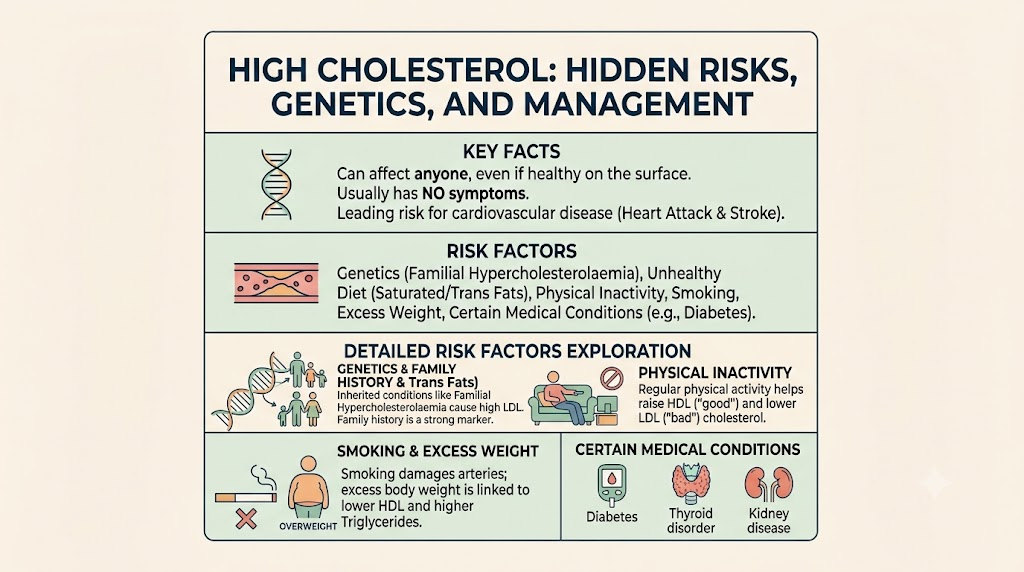
This means that even someone who exercises regularly, has a healthy body weight and feels completely well can still have abnormal cholesterol levels.
Does High Cholesterol Have Symptoms?
Usually, no.
High cholesterol often causes no noticeable symptoms. You can feel completely healthy while elevated LDL cholesterol gradually contributes to plaque formation within your arteries.
For this reason, you should not rely on your appearance, weight or how you feel to determine whether your cholesterol level is healthy.
When Should You Check Your Cholesterol?
According to Malaysia’s Clinical Practice Guidelines on Management of Dyslipidaemia 2023, lipid screening is advocated for all adults over 30 years old.
For most adults, a non-fasting lipid profile can be used for screening. A fasting lipid profile may be recommended in certain situations, including individuals with previously elevated triglyceride levels.
If LDL cholesterol is at the appropriate target and triglycerides are low, screening can generally be repeated every 3 years. People with high or very high cardiovascular risk may require annual screening.
Your doctor may recommend earlier or more frequent testing depending on your medical history, family history and cardiovascular risk factors.
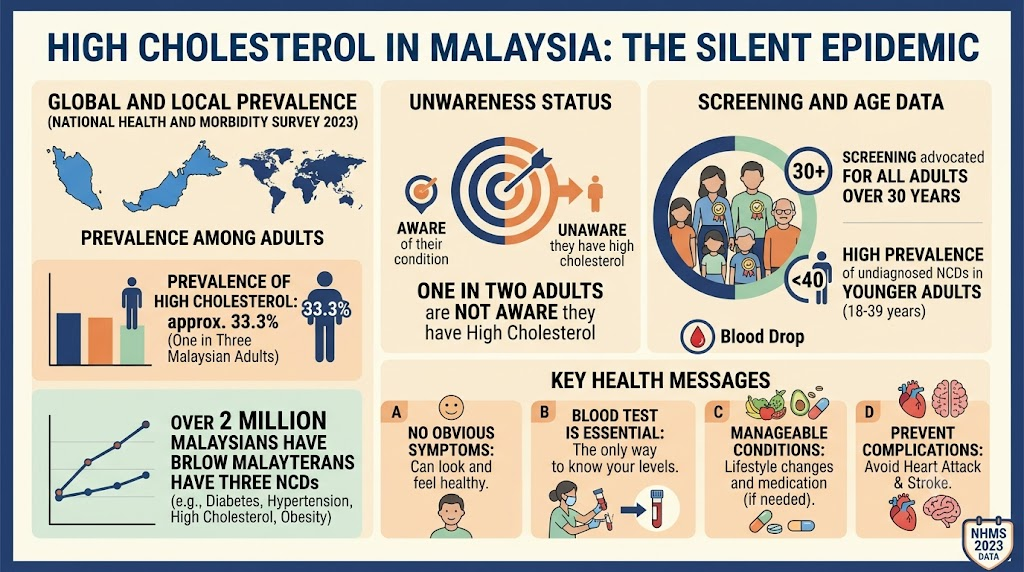
Source: National Health and Morbidity Survey (NHMS) 2023: Non-communicable Diseases and Healthcare Demand. Institute for Public Health, Ministry of Health Malaysia. 2024.
What Happens If Your Cholesterol Is High?
Having high cholesterol does not mean everyone requires the same treatment.
Your doctor will consider your cholesterol results together with your overall cardiovascular risk, which may include factors such as:
- Age
- Blood pressure
- Smoking status
- Diabetes
- Kidney disease
- Family history
- Previous cardiovascular disease
- LDL cholesterol level
Lifestyle measures are an important part of managing cholesterol and reducing cardiovascular risk. These include eating a balanced diet, staying physically active, maintaining a healthy weight and avoiding smoking.
For people with higher cardiovascular risk or significantly elevated cholesterol levels, cholesterol-lowering medication such as a statin may also be recommended after medical assessment.
The Bottom Line
Looking healthy does not necessarily mean your cholesterol is healthy.
You can be slim, active and symptom-free and still have high cholesterol, particularly if genetics or other medical factors are involved.
A blood test is the most reliable way to know your cholesterol levels. If you are over 30 or have risk factors such as diabetes, high blood pressure, smoking or a family history of premature cardiovascular disease, speak with your healthcare provider about cholesterol screening.
Frequently Asked Questions About High Cholesterol
1. Can a skinny person have high cholesterol?
Yes. Being slim does not guarantee that your cholesterol levels are healthy. Genetics, diet, medical conditions and other cardiovascular risk factors can contribute to high cholesterol regardless of body size.
2. Can you have high cholesterol even if you exercise regularly?
Yes. Regular exercise is beneficial for cardiovascular health, but it does not completely prevent high cholesterol. Some people may still have elevated cholesterol because of genetics, diet, age or underlying medical conditions.
3. What are the symptoms of high cholesterol?
High cholesterol usually does not cause noticeable symptoms. Many people only discover it after having a blood test. This is why cholesterol screening is important even when you feel healthy.
4. Do I need to fast before a cholesterol test?
Not always. According to Malaysia’s Clinical Practice Guidelines on Management of Dyslipidaemia 2023, a non-fasting lipid profile can be used for cholesterol screening in most individuals. Your doctor may recommend a fasting test in certain situations, such as when triglyceride levels are significantly elevated.
5. At what age should I start checking my cholesterol?
Malaysia’s Clinical Practice Guidelines on Management of Dyslipidaemia 2023 advocate lipid screening for adults over 30 years old. Earlier or more frequent testing may be recommended if you have cardiovascular risk factors or a relevant family history.
6. Can high cholesterol be caused by genetics?
Yes. Genetics can have a significant effect on cholesterol levels. For example, familial hypercholesterolaemia (FH) is an inherited condition that can cause very high LDL cholesterol and increase the risk of premature cardiovascular disease.
7. Does high cholesterol always require medication?
No. Treatment depends on your cholesterol levels and your overall cardiovascular risk. Lifestyle changes are important, while some people may also require cholesterol-lowering medication such as statins. Your doctor can assess your individual risk and recommend an appropriate treatment plan.