Adult vaccination is an important part of preventive healthcare, but not every adult requires the same vaccines. The vaccinations that may be appropriate depend on factors such as age, medical conditions, previous vaccination history, occupation, pregnancy and travel plans. Some childhood vaccines lose effectiveness over time, while others become more important as we age or develop certain medical conditions.
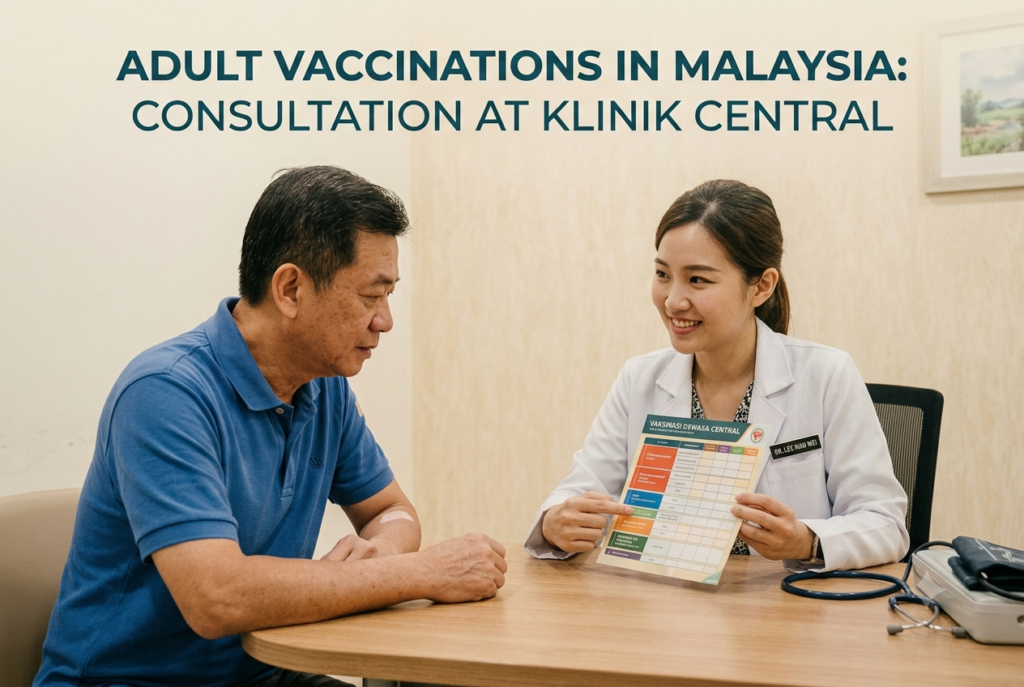
At Klinik Central, we provide personalized vaccination advice based on your age, medical history, occupation, travel plans, and individual risk factors. A doctor can review your individual risk factors and advise which vaccines, if any, may be appropriate.
___________________________________________________________________
Why Are Adult Vaccinations Important?
Vaccines train your immune system to recognise and fight specific diseases before they can cause serious illness.
Although healthy adults often recover from infections, some diseases can lead to:
- Hospitalisation
- Pneumonia
- Long-term disability
- Cancer (for certain viruses)
- Severe complications in older adults
- Transmission to babies, elderly family members, and people with weakened immune systems
Vaccination not only protects you but also helps reduce the spread of vaccine-preventable diseases within your family and community.
Who Should Consider Reviewing Their Vaccination Status?
A vaccination review may be helpful if you:
- Are aged 50 years or older
- Have diabetes, asthma, COPD, heart disease, kidney disease, or liver disease
- Have a weakened immune system
- Are pregnant or planning pregnancy
- Work in healthcare, childcare, education, or frontline services
- Travel overseas
- Live with elderly parents, newborn babies, or immunocompromised family members
- Cannot remember your previous vaccinations
If you’re unsure which vaccines you have received, your doctor can help determine which vaccinations may be appropriate based on your medical history.
Adult Vaccinations in Malaysia: Which Vaccines Are Commonly Recommended?
Influenza (Flu) Vaccine
Influenza is not the same as the common cold. It is a viral infection that can cause high fever, severe body aches, cough, fatigue, and complications such as pneumonia.
Influenza circulates throughout the year in tropical countries such as Malaysia. Annual influenza vaccination may be considered, particularly for older adults, pregnant women, healthcare workers and people with certain chronic medical conditions.
Who may benefit?
- Adults aged 65 years and above
- Pregnant women
- People with diabetes
- Individuals with heart or lung diseases
- Children aged 6 months and above may benefit from annual influenza vaccination, especially those attending childcare, kindergarten, primary school or secondary school.
- Healthcare workers
- Caregivers
- Individuals with weakened immune systems
Pneumococcal Vaccine
Pneumococcal bacteria can cause serious infections including:
- Pneumonia
- Bloodstream infections
- Meningitis
The risk increases with age and chronic medical conditions.
Vaccination may be recommended for:
- 50 years and older: Routine vaccination is recommended for all adults starting at age 50 or 65 depending on local health guidelines and the specific vaccine type (such as PCV20, PCV21, or PCV15 followed by PPSV23).
- Individuals with diabetes
- Chronic kidney disease
- Chronic lung disease
- Chronic heart disease
- Certain immunocompromising conditions such as advanced HIV or active cancers
Your doctor will advise which pneumococcal vaccine is most suitable based on your vaccination history.
Shingles (Herpes Zoster) Vaccine
If you have had chickenpox before, the virus remains dormant in your body and can reactivate later as shingles.
Shingles often causes:
- Painful skin rash
- Burning nerve pain
- Long-lasting nerve pain (post-herpetic neuralgia)
- Eye complications if it affects the face
Shingles vaccination can reduce the risk of shingles and related complications, although it does not guarantee complete protection.
Generally recommended for:
- Adults aged 50 years and above
- Selected younger adults with increased risk, following medical assessment.
Human Papillomavirus (HPV) Vaccine
HPV is a very common viral infection.
Persistent HPV infection is associated with:
- Cervical cancer
- Anal cancer
- Penile cancer
- Certain throat cancers
- Genital warts
Vaccination provides the greatest benefit before exposure to HPV but may still be appropriate for some adults following discussion with a doctor. HPV vaccination does not treat an existing HPV infection or replace routine cervical screening.
Even after vaccination, women should continue regular cervical cancer screening as recommended.
Hepatitis A & Hepatitis B Vaccines
Hepatitis A and B both affect the liver differently. Hepatitis A usually causes an acute infection, while hepatitis B can become chronic and may lead to cirrhosis or liver cancer.
Hepatitis A may be considered for:
- Certain travellers
- People with chronic liver disease
- Selected occupational or exposure risks
Hepatitis B may be considered for:
- Healthcare workers
- People without documented immunity
- People with selected medical, occupational or exposure risks
- Certain travellers
Combination vaccines are available for eligible individuals.
Tetanus, Diphtheria & Pertussis (Td/TDaP)
Tdap may be recommended during each pregnancy to help provide protection against pertussis for the newborn. The timing should be discussed with the attending doctor.
Vaccination is particularly important:
- During every pregnancy (TDaP)
- After certain injuries with tetanus risk
- If routine booster vaccinations are overdue
Measles, Mumps & Rubella (MMR)
Some adults may not have completed childhood vaccination or may not have immunity.
Vaccination may be recommended before:
- International travels
- University enrolment
- Healthcare employment
- During outbreaks
Can Adults Receive Multiple Vaccines During One Visit?
Yes.
Many vaccines can safely be administered during the same appointment at different injection sites. Receiving multiple vaccines during one visit can reduce the number of clinic visits needed and improve overall vaccination coverage.
Your doctor will advise whether this is suitable based on your health status and the vaccines being given.
Are Vaccines Safe?
Vaccines registered for use in Malaysia are evaluated for quality, safety and effectiveness. As with any medicine, vaccines may cause side effects, and suitability differs between individuals.
Most side effects are mild and temporary, such as:
- Pain at the injection site
- Mild swelling
- Low-grade fever
- Fatigue
Serious allergic reactions are uncommon but can occur with any medicine. Individuals are routinely observed for a short period after vaccination where appropriate.
If you have previously experienced a severe allergic reaction to a vaccine or one of its components, inform your doctor before vaccination.
Vaccination During Pregnancy
Pregnancy is an important time to review vaccination status.
Some vaccines are recommended during pregnancy because they help protect both the mother and the newborn baby.
For example:
- Influenza vaccine is commonly recommended during pregnancy.
- Tdap vaccine is recommended during each pregnancy to help protect newborns against pertussis (whooping cough).
Certain live vaccines are generally avoided during pregnancy as a precaution.
Your doctor will recommend vaccines based on your stage of pregnancy and individual health needs.
Frequently Asked Questions
Do adults still need vaccines if they were vaccinated as children?
Yes. Protection from some vaccines decreases over time, and additional vaccines may become recommended due to age, occupation, travel, or medical conditions.
Which vaccine should adults receive every year?
Annual influenza vaccination is generally recommended because influenza viruses change over time.
Which vaccines are commonly recommended after age 50?
Depending on your health status, your doctor may recommend vaccines such as:
- Influenza
- Shingles
- Pneumococcal
Can I receive more than one vaccine at the same visit?
Yes. Many vaccines can be administered together if clinically appropriate.
Can vaccines harm my baby during pregnancy?
Certain inactivated vaccines may be recommended during pregnancy when their benefits outweigh the risks. Live vaccines are generally avoided during pregnancy. The appropriate vaccine and timing should be discussed with a doctor. However, certain live vaccines are generally avoided during pregnancy. Your doctor will recommend vaccines appropriate for your pregnancy.
I am healthy. Do I still need vaccines?
Even healthy adults can develop serious vaccine-preventable diseases. Vaccination recommendations depend on your age, occupation, travel plans, previous vaccination history, and individual risk factors.
When Should You See a Doctor About Vaccination?
Consider scheduling a vaccination review if you:
- Are unsure of your vaccination history
- Have a chronic medical condition
- Are planning overseas travel
- Are pregnant or planning pregnancy
- Are over 50 years old
- Work in healthcare or other high-risk occupations
- Want personalised advice on recommended vaccines
A doctor can review your health history and recommend vaccines appropriate for your individual circumstances.
Adult Vaccination at Klinik Central
At Klinik Central, we believe prevention is one of the most effective ways to protect your health. Our doctors provide personalised advice on adult vaccinations in Malaysia based on your age, health conditions, lifestyle, and individual risk factors.
Our doctors provide personalised vaccination consultations and can advise on vaccines based on your:
- Age
- Medical conditions
- Lifestyle
- Occupation
- Travel plans
- Previous vaccination history
Not every adult needs the same vaccinations. A doctor can review your age, medical history, previous vaccination records, occupation and travel plans before advising which vaccines may be appropriate. Contact Klinik Central SS15 or Klinik Central Taman Megah to confirm consultation and vaccine availability.