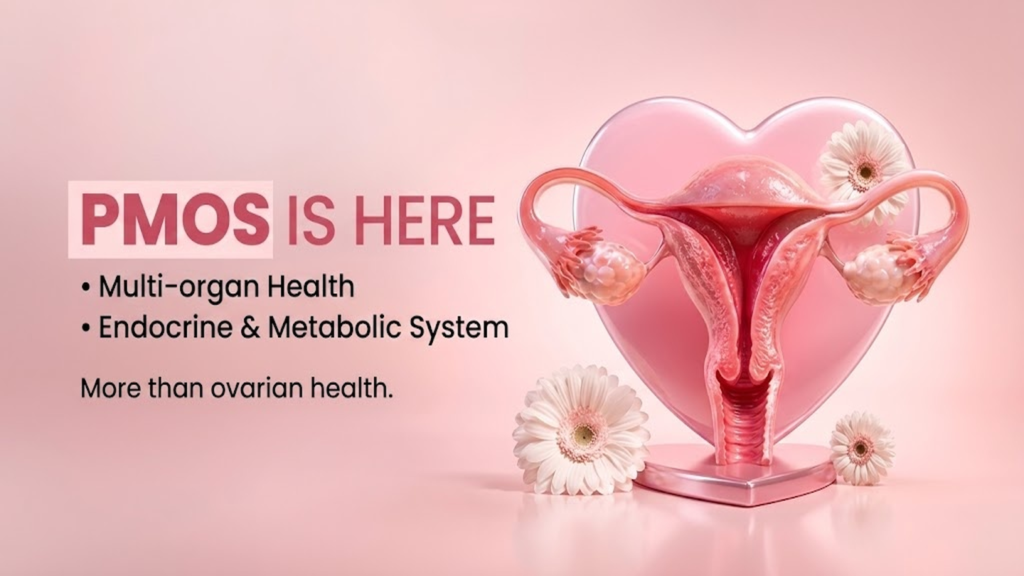
PMOS, formerly known as PCOS, is a common hormonal and metabolic condition that can affect much more than your menstrual cycle. While irregular or missed periods are among its best-known signs, Polyendocrine Metabolic Ovarian Syndrome (PMOS) can also affect your skin, hair, weight, fertility and long-term metabolic health.
For women in Malaysia experiencing persistent menstrual changes or other symptoms suggestive of PMOS, getting properly assessed is important. Not everyone with PMOS experiences the same symptoms, and having irregular periods alone does not automatically mean that you have PMOS.
What Is PMOS?
Polyendocrine Metabolic Ovarian Syndrome (PMOS) is the new name for the condition previously known as Polycystic Ovary Syndrome (PCOS).
It is a hormonal and metabolic condition affecting women of reproductive age.
PMOS commonly involves a combination of:
- Irregular or absent ovulation
- Higher levels or effects of androgen hormones
- Polycystic ovarian morphology
However, the condition can affect much more than the ovaries. It is also associated with metabolic health, insulin resistance, skin and hair changes, fertility and psychological well-being.
How Common Is PMOS?
PMOS is one of the most common endocrine and metabolic conditions affecting women of reproductive age.
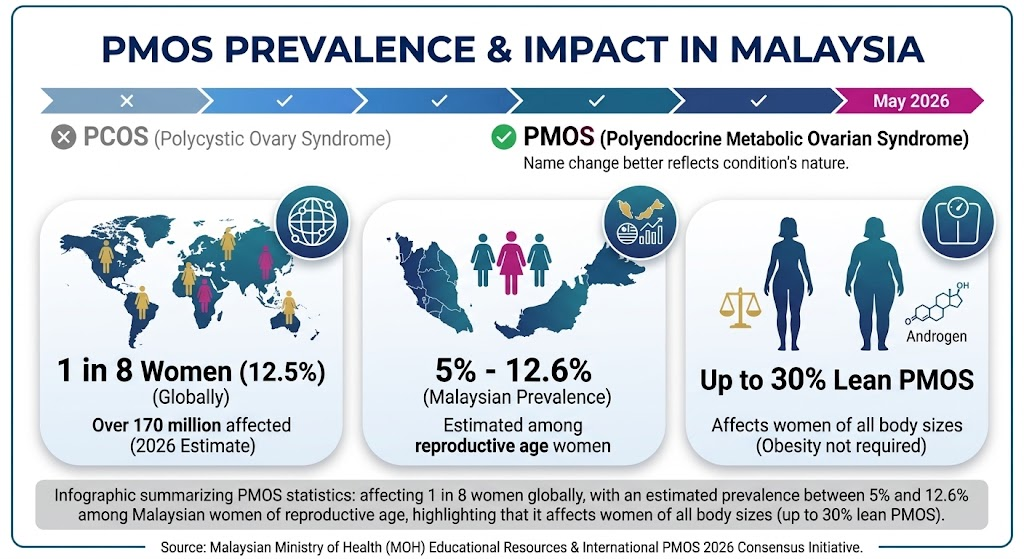
The 2026 international PMOS name-change initiative estimates that the condition affects approximately 1 in 8 women of reproductive age worldwide, representing more than 170 million women globally.
Malaysian Ministry of Health educational materials have historically described PCOS as affecting approximately 5–10% of women of reproductive age.
Differences between prevalence estimates can occur because of the populations studied and the diagnostic criteria used.
Despite being common, the condition may remain unrecognised because symptoms can vary considerably between women.
Some women first seek medical attention because of irregular periods, while others may initially notice acne, excess facial or body hair, difficulty managing their weight or problems becoming pregnant.
PMOS: More Than Just Irregular Periods
Irregular periods are an important feature of PMOS, but the condition can affect several areas of health.
Here are 7 important signs and health effects associated with PMOS.
1. Irregular or Missed Periods
One of the most common features of PMOS is irregular ovulation.
This may cause:
- Long gaps between periods
- Fewer menstrual periods each year
- Missed periods
- Unpredictable menstrual cycles
For adult women more than three years after their first period, menstrual cycles shorter than 21 days, longer than 35 days, or fewer than eight cycles per year may indicate irregular menstrual cycles and warrant further assessment.
However, menstrual patterns vary with age, particularly during the first few years after menstruation begins.
2. Acne or Oily Skin
PMOS may be associated with increased androgen activity.
Higher androgen levels can contribute to increased oil production and persistent or more severe acne.
Acne alone does not mean that someone has PMOS. However, persistent acne occurring together with irregular periods or other signs of androgen excess may prompt further assessment.
3. Excess Facial or Body Hair
Some women with PMOS develop hirsutism, which refers to excessive coarse or dark hair growth in areas such as the:
- Upper lip
- Chin
- Chest
- Abdomen
- Back
This may occur because of increased androgen levels or increased sensitivity of hair follicles to androgens.
The degree of hair growth can differ considerably between individuals and ethnic groups.
4. Thinning Hair on the Scalp
Androgen excess may also affect scalp hair.
Some women with PMOS experience progressive thinning of the hair, particularly around the crown or frontal area.
Hair loss has many other possible causes, including thyroid disorders, nutritional deficiencies and genetic factors. A medical assessment can help determine the underlying cause.
5. Weight Gain or Difficulty Managing Weight
PMOS can occur in women of any body size. Being overweight is not required for diagnosis.
However, some women with PMOS experience weight gain or difficulty managing their weight.
Insulin resistance is commonly associated with PMOS and may contribute to metabolic changes.
Healthy eating, regular physical activity and prevention of excess weight gain are therefore important components of long-term management.
6. Difficulty Becoming Pregnant
PMOS is commonly associated with ovulatory dysfunction.
When ovulation occurs irregularly or does not occur, becoming pregnant may take longer.
However, having PMOS does not mean that you cannot become pregnant.
Many women with PMOS conceive naturally, while others may benefit from fertility treatment or treatment to support ovulation.
7. Increased Metabolic Health Risks
PMOS is not only a reproductive condition.
Women with PMOS have an increased risk of impaired glucose regulation and type 2 diabetes, regardless of age and body mass index.
PMOS is also associated with cardiovascular risk factors such as abnormal cholesterol levels and high blood pressure.
This is why assessment should look beyond periods and fertility and consider a woman’s overall metabolic health.
How Is PMOS Diagnosed?
There is no single test that can diagnose PMOS.
In adults, diagnosis generally requires at least two of the following three features, after other possible causes have been excluded:
- Irregular or absent ovulation
- Clinical or biochemical evidence of increased androgen levels
- Polycystic ovarian morphology identified by appropriate assessment
If both irregular menstrual cycles and signs of androgen excess are already present, an ovarian ultrasound may not always be necessary to establish the diagnosis.
Importantly, seeing polycystic ovarian morphology on ultrasound does not automatically mean that you have PMOS.
Diagnosis should consider your symptoms, menstrual history, examination findings and appropriate investigations.
The approach is different in adolescents because irregular periods and acne can be part of normal puberty. Ultrasound is not recommended for diagnosing PMOS in adolescents.
What Tests May Be Done for PMOS?
Your doctor will usually begin by taking a detailed history, including your menstrual cycle, weight changes, acne, unwanted hair growth, hair loss, medications, family history and pregnancy plans.
Depending on your symptoms, investigations may include:
Hormonal Assessment
Blood tests may be used to assess androgen levels and exclude other conditions that can resemble PMOS.
Tests may include:
- Total and/or free testosterone
- Thyroid-stimulating hormone (TSH)
- Prolactin
- Other hormonal tests when clinically indicated
Metabolic Assessment
Because PMOS is associated with metabolic health risks, assessment may also include:
- Blood glucose assessment
- 75-g oral glucose tolerance test (OGTT)
- HbA1c when appropriate
- Lipid profile
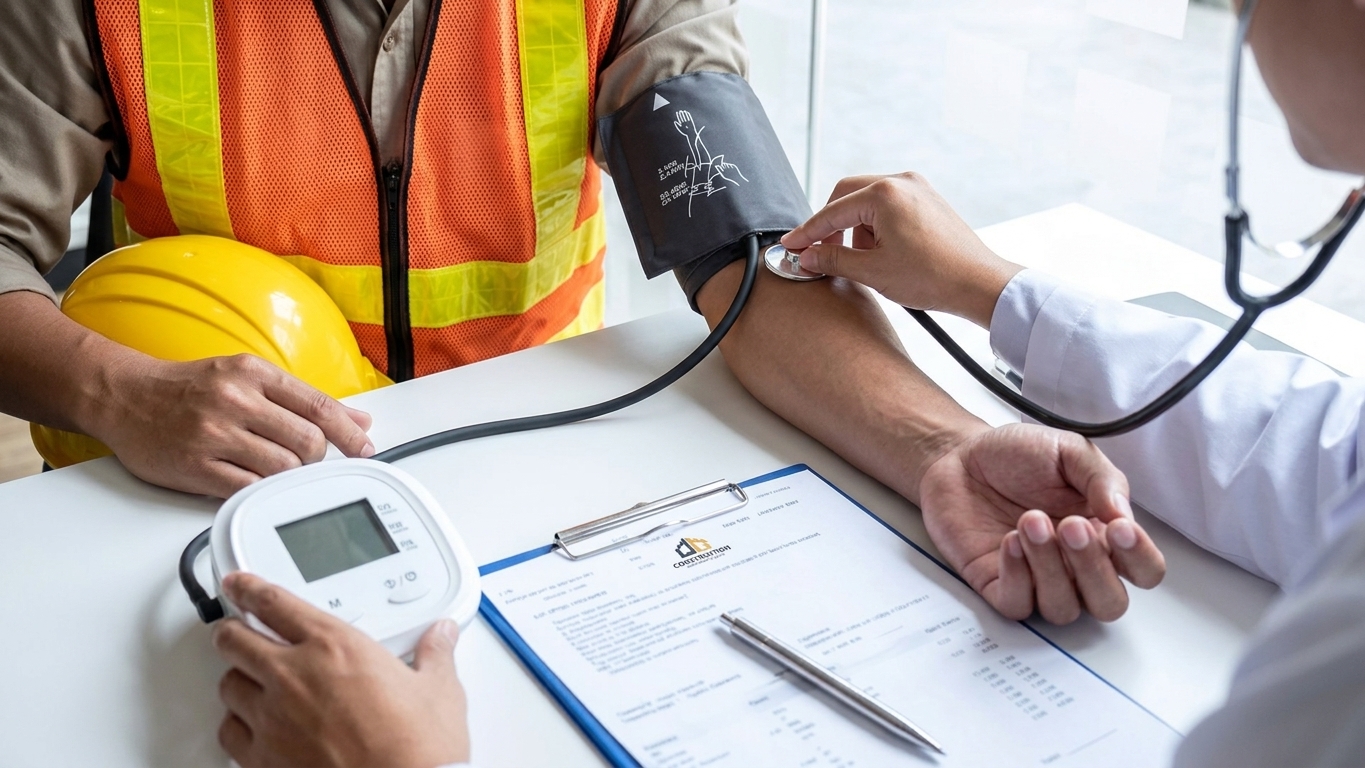
- Blood pressure
- Weight and BMI assessment
The 75-g OGTT is considered the most accurate test for assessing glucose status in women with PMOS, regardless of BMI. Other glucose tests may be considered when an OGTT cannot be performed.
Pelvic Ultrasound
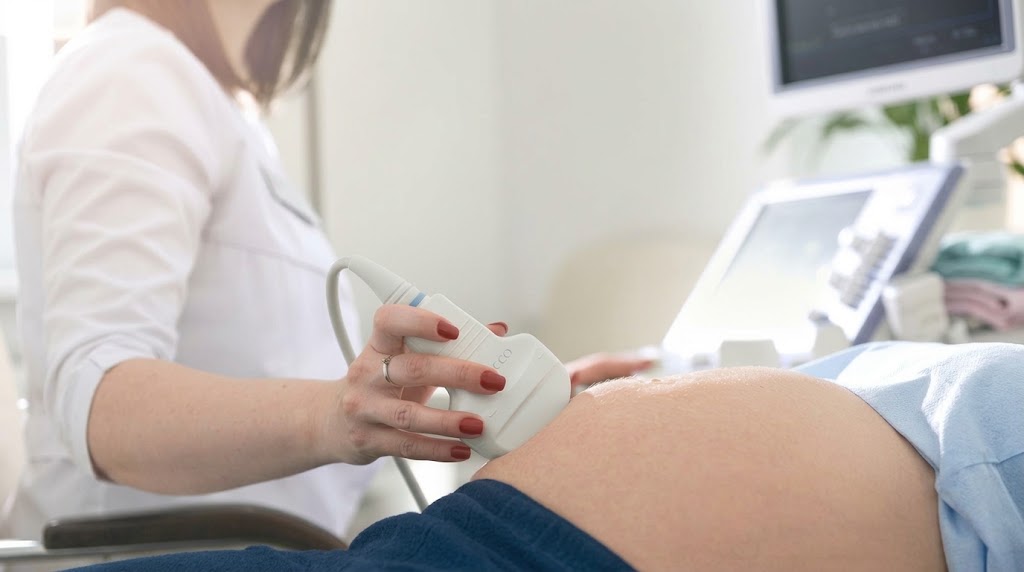
Ultrasound may be used in appropriate adult patients to assess ovarian morphology and investigate other possible causes of menstrual abnormalities.
However, ultrasound is not required for every patient with suspected PMOS.
Your doctor will determine which investigations are appropriate based on your symptoms and clinical findings.
PMOS and Insulin Resistance: What Is the Connection?
Insulin resistance is commonly associated with PMOS and highlights why the condition is more than a menstrual or fertility problem.
Insulin is a hormone that helps glucose move from the bloodstream into the body’s cells, where it can be used for energy.
With insulin resistance, the body’s cells do not respond to insulin as effectively. The pancreas may compensate by producing more insulin, resulting in higher circulating insulin levels.
In PMOS, higher insulin levels may contribute to increased androgen production and reproductive dysfunction.
This may contribute to features such as:
- Irregular ovulation and periods
- Acne
- Excess facial or body hair
- Difficulty becoming pregnant
Importantly, insulin resistance can occur in women with PMOS regardless of body size.
Over time, women with PMOS have an increased risk of impaired glucose tolerance and type 2 diabetes. Metabolic health is therefore an important component of PMOS assessment and long-term follow-up.
PMOS Treatment: Does Everyone Need the Same Treatment?
No.
PMOS treatment should be individualised according to your symptoms, metabolic health and whether you are currently planning a pregnancy.
Lifestyle Management
A healthy lifestyle is an important part of PMOS management for everyone, regardless of body size.
This includes:
- Regular physical activity
- Balanced and sustainable eating habits
- Adequate sleep
- Prevention of excessive weight gain
- Weight management when appropriate
There is no single “PMOS diet” proven to be best for everyone. Sustainable healthy eating patterns that suit the individual are generally preferred over unnecessarily restrictive diets.
Managing Irregular Periods
For women who are not currently trying to become pregnant, hormonal treatment such as a combined oral contraceptive pill may be considered to improve menstrual regularity and symptoms related to androgen excess.
Progestogen therapy may be considered in selected patients for endometrial protection.
The appropriate option depends on individual medical history and risks and should be discussed with a doctor.
Metformin
Metformin may be considered in selected women with PMOS, particularly when metabolic features are a concern.
It is not automatically required for everyone diagnosed with PMOS.
Managing Acne and Excess Hair
Treatment may include hormonal therapy, appropriate dermatological treatment and cosmetic hair-removal methods.
The best approach depends on symptom severity and whether pregnancy is planned.
Fertility Treatment
Women with PMOS who experience difficulty becoming pregnant may require assessment for anovulatory infertility as well as other possible fertility factors.
Ovulation-induction treatment may be considered when appropriate under medical supervision.
Why Regular Follow-Up Matters
PMOS can affect health beyond the reproductive years.
Follow-up provides an opportunity to monitor:
- Menstrual patterns
- Blood pressure
- Blood glucose
- Cholesterol
- Weight and metabolic health
- Fertility and pregnancy planning
- Psychological well-being
Women with PMOS have a higher risk of endometrial hyperplasia and endometrial cancer, although the overall chance of developing endometrial cancer remains low.
Long-standing untreated amenorrhoea, higher weight and type 2 diabetes can further increase this risk.
Routine screening for endometrial cancer is not recommended for everyone with PMOS, but prolonged absence of periods should be discussed with a doctor.
When Should You See a Doctor?
Consider making an appointment if you experience persistent irregular or absent periods, particularly when accompanied by:
- Persistent acne
- Increased facial or body hair
- Scalp hair thinning
- Unexplained weight changes
- Difficulty becoming pregnant
You should also seek medical assessment if your periods suddenly become irregular after previously being regular.
These symptoms are not always caused by PMOS. Pregnancy, thyroid disorders, elevated prolactin and other hormonal conditions can produce similar symptoms, which is why proper assessment is important.
The Takeaway
PMOS is more than just irregular periods.
Previously known as PCOS, Polyendocrine Metabolic Ovarian Syndrome (PMOS) is a hormonal and metabolic condition that can affect the menstrual cycle, skin, hair, fertility, glucose regulation and long-term health.
The new name better reflects the broader nature of the condition and moves away from the misconception that ovarian “cysts” define the syndrome.
The familiar “string of pearls” appearance on ultrasound may be seen in some women, but ultrasound findings alone are not enough to diagnose PMOS. Similarly, insulin resistance is commonly associated with PMOS and highlights the importance of looking beyond reproductive symptoms to overall metabolic health.
If you have persistent irregular periods together with symptoms such as acne, excess facial or body hair, scalp hair thinning, unexplained weight changes or difficulty becoming pregnant, consider discussing them with a doctor.
Early assessment can help identify the cause of your symptoms, exclude other hormonal conditions and develop an individualised plan for your reproductive and long-term health.