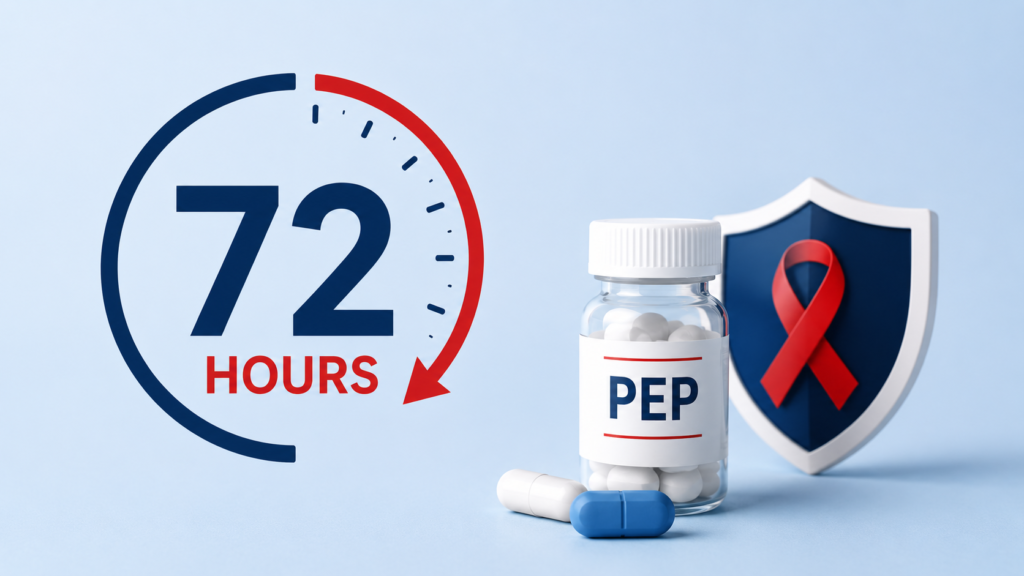
HIV PEP (post exposure prophylaxis) is a short course antiretroviral medicines after a potential HIV exposure to reduce the chance of HIV infection.
Timing is critical. PEP should be started as soon as possible and within 72 hours of exposure. Do not wait for symptoms or wait until the 72-hour mark before seeking medical attention
When indicated, the treatment course is generally 28 days.
What Is HIV PEP?
PEP stands for post-exposure prophylaxis. It is an emergency HIV prevention treatment given after a recent potential exposure to HIV.
PEP is different from PrEP (pre-exposure prophylaxis):
- PEP: taken after a potential HIV exposure
- PrEP: taken before exposure by people with ongoing or recurring HIV risk
PEP is intended for emergency situations and should not replace PrEP or other preventive measures when exposure risk is ongoing.
The 72-Hour Window: Why Acting Quickly Matters
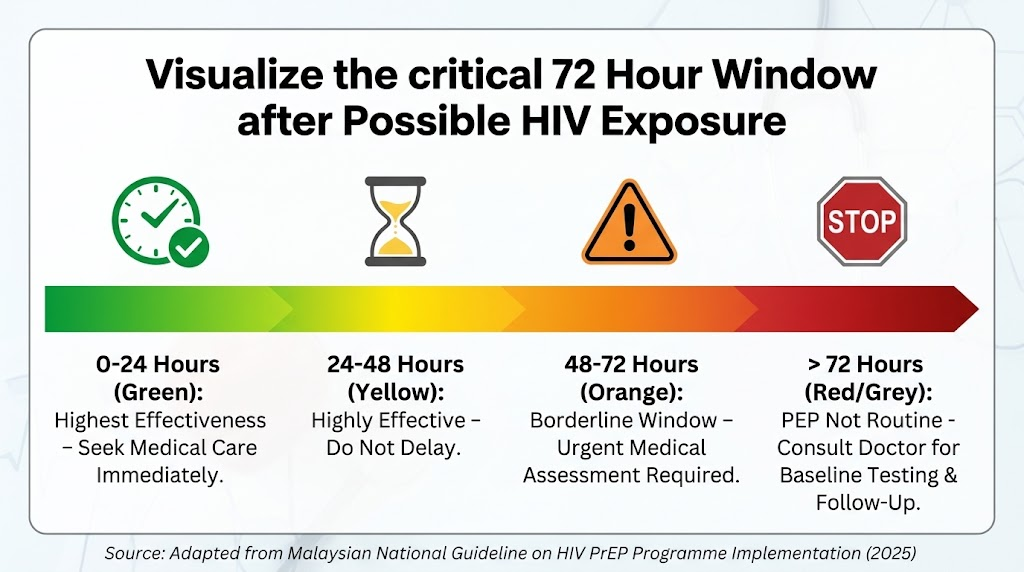
PEP should ideally be started as soon as possible following a significant HIV exposure and may be considered up to 72 hours after exposure.
If the exposure occurred:
- A few hours ago: seek medical attention now.
- Within the last 1–2 days: you may still be eligible for PEP. Arrange an assessment promptly.
- Close to 72 hours ago: seek urgent medical assessment.
- More than 72 hours ago: PEP is generally not routinely initiated, but you should still see a healthcare professional for HIV testing, STI screening and further prevention advice.
The 72-hour period is the maximum window for starting PEP, not a reason to wait.
Which Exposures May Require HIV PEP?
Not every sexual contact or exposure to body fluids requires PEP. A doctor will assess the circumstances and determine whether the exposure carries a significant risk of HIV transmission.
PEP may be considered following exposures such as:
- Unprotected vaginal or anal intercourse
- Condom breakage or slippage during higher-risk sexual exposure
- Needlestick or sharps injuries
- Exposure of broken skin or mucous membranes to potentially infectious blood or body fluids
- Certain exposures involving a person known to be living with HIV, depending on their treatment and viral load
The assessment may also consider whether ejaculation occurred, the presence of blood, genital injury, sexually transmitted infections and the HIV status of the source person.
Everyday contact such as hugging, touching, sharing food or using the same toilet does not require HIV PEP.
What Should You Do Immediately After a Potential HIV Exposure?
If you have had a possible HIV exposure, contact a healthcare provider as soon as possible.
Tell the doctor:
- When the exposure occurred
- What type of exposure occurred
- Whether a condom was used, broke or slipped
- Whether the other person’s HIV status is known
- Whether there was exposure to blood
- Whether there have been other recent exposures
Do not delay seeking medical attention while waiting for the other person’s HIV test result.
For needlestick or occupational blood exposure, wash affected skin or wounds with soap and water. If the eyes or other mucous membranes are exposed, rinse thoroughly with water or saline.
Avoid aggressively squeezing a needlestick wound or injecting antiseptic or disinfectant into it.
What Happens During an HIV PEP Consultation?
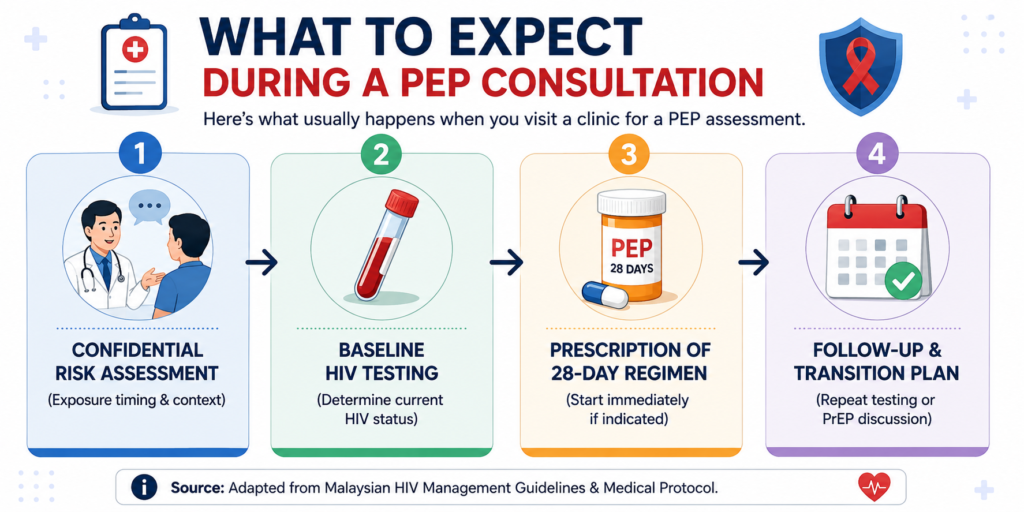
The consultation is confidential and focus on determining the actual level of HIV risk rather than making assumptions about the patient or their partner.
Your doctor may ask:
When did the exposure happen?
The timing determines whether you are still within the 72-hour PEP window.
What type of exposure occurred?
Different sexual and blood exposures carry different levels of HIV transmission risk.
Is the source person’s HIV status known?
If the person is known to be living with HIV, information regarding their treatment and recent viral load can affect the risk assessment.
Have there been other recent exposures?
This is important when interpreting your baseline HIV test and deciding whether additional testing is required.
The doctor will then determine whether PEP is recommended based on the individual circumstances.
Do I Need an HIV Test Before Starting PEP?
A baseline HIV test is an important part of the assessment.
However, a negative HIV test immediately after a recent exposure does not prove that HIV was not acquired from that exposure. HIV tests have a window period during which a very recent infection may not yet be detectable.
Malaysia’s 2025 PrEP guideline notes that the window period depends partly on the test used. Fourth-generation tests, which detect HIV antibodies and p24 antigen, can generally identify infection earlier than antibody-only third-generation tests.
This is why follow-up HIV testing remains important even when your initial result is negative.
Sexually Transmitted Infection (STI) Screening
A sexual exposure that carries a risk of HIV may also carry a risk of other sexually transmitted infections.
Depending on the type and site of exposure, screening may include:
- Syphilis
- Gonorrhoea
- Chlamydia
- Hepatitis B
- Hepatitis C
Gonorrhoea and chlamydia testing may involve samples from the relevant exposure site rather than blood testing alone.
Your doctor will advise which tests are appropriate and when they should be performed.
Pregnancy Testing
For patients who could be pregnant, a pregnancy test may be recommended as part of the baseline PEP assessment.
Pregnancy does not mean that someone should simply be denied PEP. Instead, the doctor should assess the exposure and select appropriate management.
Do I Need Anemia Workup or Investigations for Anemia Before HIV PEP?
An anaemia workup is not routinely required solely because you are starting HIV PEP.
If you have symptoms or findings suggesting anaemia — such as persistent fatigue, pallor, heavy menstrual bleeding or an abnormal full blood count — your doctor may recommend further investigations such as iron studies, ferritin, vitamin B12 or folate.
These investigations address a separate clinical issue and should not delay PEP when treatment is indicated.
You can have a look at Anemia: 7 important Causes Beyond Iron Deficiency on our blog to understand more about anemia!
How Long Do You Take HIV PEP?
A standard course of HIV PEP is generally 28 days.
Take the medication consistently and avoid intentionally skipping doses or stopping treatment early without speaking to your healthcare provider.
If you experience side effects, contact your doctor rather than stopping PEP on your own. Your treatment can be reviewed and adjusted if necessary.
What Happens After Completing PEP?
Follow-up HIV testing is an important part of PEP care because a baseline HIV test cannot exclude infection from a very recent exposure.
Your healthcare provider will advise when repeat HIV testing should be performed based on:
- Timing of the exposure
- Type of HIV test performed
- PEP treatment
- Any additional exposures
- Your individual clinical circumstances
The Malaysian 2025 PrEP guideline recommends repeat HIV testing following completion of PEP and describes immediate transition from PEP to PrEP for suitable individuals with ongoing or recurring risk of HIV exposure.
Therefore, completing 28 days of medication should not necessarily be considered the end of your HIV prevention plan.
PEP vs PrEP: What Is the Difference?
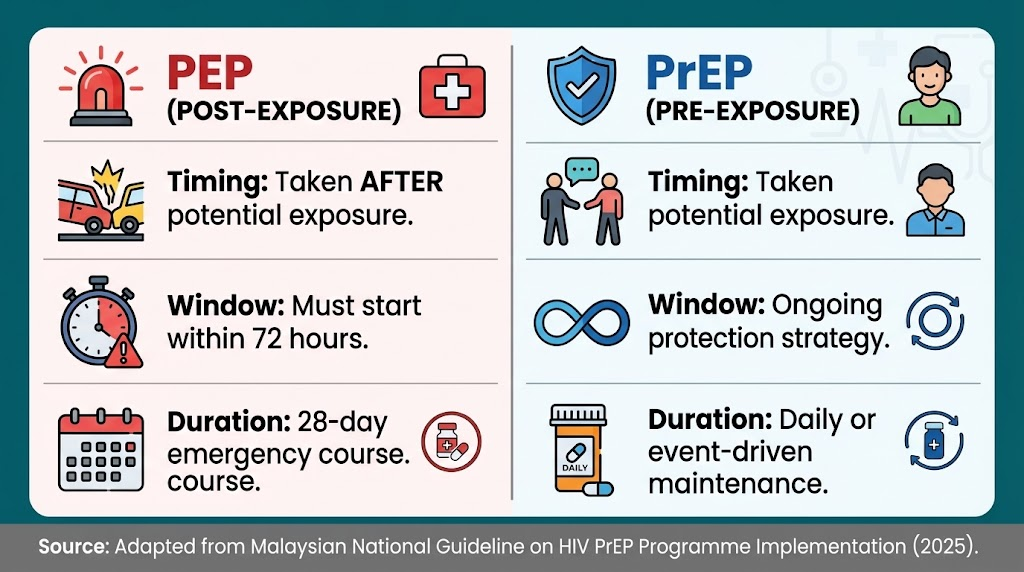
Although their names sound similar, PEP and PrEP are used at different times.
PEP (post-exposure prophylaxis) is taken after a potential HIV exposure. It is an emergency intervention that should be assessed as soon as possible and within the 72-hour window.
PrEP (pre-exposure prophylaxis) is used before exposure and is intended for people who may have an ongoing or recurring risk of acquiring HIV.
If you have needed PEP more than once, or anticipate future HIV exposure, speak to your doctor about whether PrEP would be more suitable.
What If More Than 72 Hours Have Passed?
If more than 72 hours have passed, do not assume there is nothing you can do.
Although PEP is generally not routinely initiated beyond the 72-hour window, you should still see a healthcare professional for assessment. Depending on your circumstances, this may include HIV testing, STI screening, hepatitis assessment and advice about future HIV prevention.
Can I Just Wait and See If I Develop HIV Symptoms?
No.
Early HIV infection may cause flu-like symptoms in some people, but others may have no noticeable symptoms at all.
Whether PEP is needed is therefore determined by the type of exposure and when it occurred, not by whether you have symptoms.
If an exposure happened within the last 72 hours, the decision about PEP should be based on the exposure risk and timing, not on whether you feel unwell.
HIV PEP in Malaysia: When Should You See a Doctor?
If you think you may have been exposed to HIV, particularly within the previous 72 hours, seek medical attention promptly.
Tell your healthcare provider that you have had a possible HIV exposure and would like to be assessed for HIV PEP.
Providing the approximate time and type of exposure will help your doctor assess your risk and determine whether PEP is appropriate.
PEP consultations should be handled confidentially and without judgement.
Frequently Asked Questions About HIV PEP
Can I start HIV PEP after 24 hours?
Potentially, yes. If the exposure occurred within 72 hours, seek medical assessment as soon as possible. Do not wait any longer unnecessarily.
Can I start PEP after 48 hours?
You may still be within the recommended assessment window. Seek medical attention urgently because PEP should be started as early as possible when indicated.
Can I start PEP after 72 hours?
PEP is generally not routinely initiated beyond 72 hours. You should still see a healthcare professional for HIV testing, assessment and advice about further prevention.
How long is a course of PEP?
A standard PEP course is generally 28 days.
Does a negative HIV test immediately after exposure mean I am safe?
No. A test performed immediately after an exposure is primarily useful as a baseline test. A recent HIV infection may still be within the test’s window period.
Should I wait for my partner’s HIV test before starting PEP?
No. If you have had a potentially significant exposure, seek medical assessment immediately. When PEP is indicated, Malaysian guidance advises against delaying the first dose while waiting for additional information in relevant exposure settings.
What should I do if I frequently need PEP?
Speak with your healthcare provider about PrEP, which may provide a more appropriate ongoing HIV prevention strategy.
This article provides general health information and does not replace an individual medical consultation. PEP decisions require assessment of the specific exposure, timing, HIV status and relevant medical factors.
_______________________________________________________________________________________________________________________