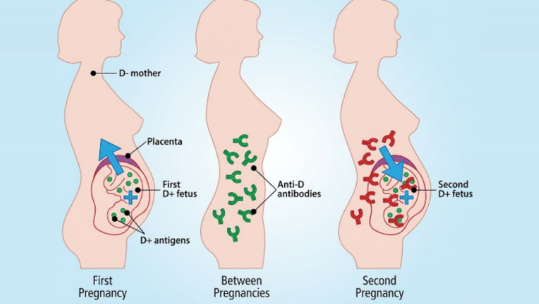
Anti-D injection is an important treatment for Rh D-negative pregnant women to help prevent Rh sensitisation and protect future pregnancies.
During pregnancy, your blood group is routinely checked as part of antenatal care. If you are Rh D-negative, your doctor may recommend an anti-D injection to reduce the risk of complications in a current or future pregnancy.
What Is Rh Incompatibility?
Your blood group is determined by several factors, including the ABO blood group system and the Rhesus (Rh) factor.
If you are Rh D-negative, but your baby is Rh D-positive, there is a possibility that a small amount of the baby’s blood may enter your bloodstream during pregnancy or delivery.
This can cause your immune system to produce anti-D antibodies. This process is known as Rh sensitisation or rhesus isoimmunisation.
According to the Ministry of Health Malaysia (KKM), Rh sensitisation can cause haemolytic disease of the fetus and newborn, where maternal antibodies attack Rh-positive red blood cells in the baby.
Why Is Anti-D Injection Important?
Anti-D immunoglobulin helps prevent your immune system from becoming sensitised to Rh D-positive red blood cells.
This is particularly important because sensitisation can affect future pregnancies. Once a woman has already developed anti-D antibodies, anti-D prophylaxis will not reverse the sensitisation.
KKM recommends anti-D prophylaxis for Rh D-negative pregnant women who have not previously been sensitised.
Who Needs an Anti-D Injection?
Anti-D prophylaxis is generally considered for a woman who is:
- Rh D-negative
- Pregnant
- Not previously sensitised to Rh D
- At risk of exposure to Rh D-positive fetal blood
At the first antenatal visit, the mother’s blood group and Rh type is checked. If she is Rh D-negative, her partner’s blood group and Rh type should also be checked where appropriate. An indirect Coombs test is recommended at booking and again at 28 weeks.
If anti-D antibodies are already present, further assessment and monitoring are required rather than routine anti-D prophylaxis.
When Is Anti-D Injection Given?
For an Rh D-negative pregnant woman who has not been previously sensitised, KKM recommends routine antenatal anti-D prophylaxis (RAADP) using either of the following regimens:
- Single-dose regimen: 1,500 IU at 28–30 weeks
- Two-dose regimen: 1,250 IU at 28 and 34 weeks
The appropriate regimen may depend on the clinical setting and available anti-D preparation.
Anti-D After Bleeding or Other Pregnancy Events
Anti-D may also be required after certain events that could allow fetal blood to enter the mother’s circulation.
These potentially sensitising events include:
- Miscarriage requiring surgical evacuation
- Threatened miscarriage after 12 weeks
- Ectopic pregnancy
- Evacuation of a molar pregnancy
- Termination of pregnancy
- Amniocentesis, chorionic villus biopsy or cordocentesis
- Antepartum haemorrhage
- External cephalic version
- Intrauterine death or stillbirth
- Certain procedures performed inside the uterus
- Abdominal trauma
- Delivery, including vaginal delivery, instrumental delivery or Caesarean section
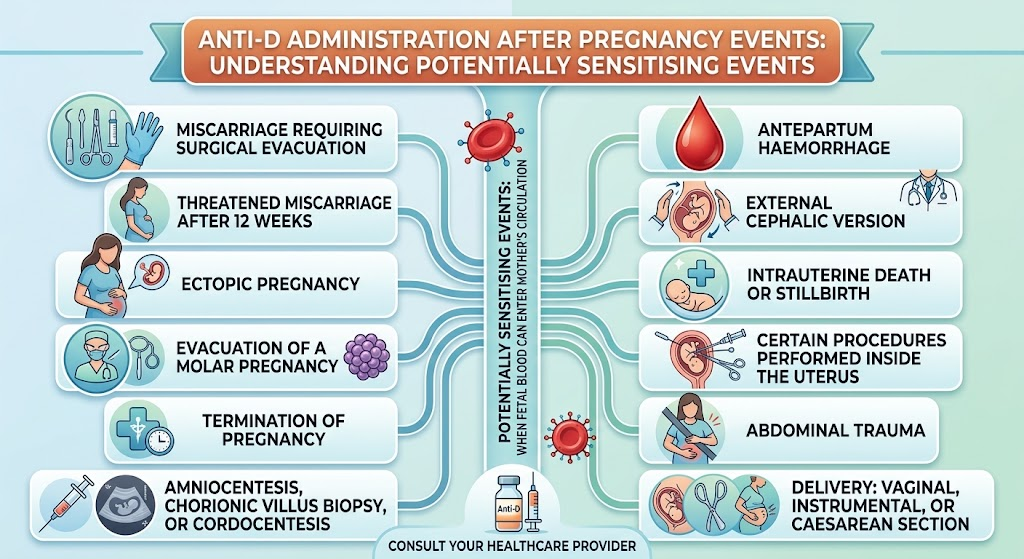
A clinical overview of potentially sensitising events during pregnancy—such as antepartum hemorrhage, procedures, abdominal trauma, or delivery—where fetal blood cells may enter maternal circulation, requiring Anti-D immunoglobulin prophylaxis to protect future pregnancies.
Anti-D should generally be administered within 72 hours of a potentially sensitising event, with the dose depending on the gestational age and amount of fetomaternal haemorrhage.
For events occurring from 20 weeks onwards, KKM recommends assessment of fetomaternal haemorrhage and a minimum anti-D dose of 500 IU within 72 hours, with additional dosing when indicated.
What Happens After Delivery?
After delivery, the baby’s Rh status should be checked.
For a non-sensitised Rh D-negative mother who delivers an Rh D-positive baby, KKM recommends 500 IU of anti-D within 72 hours after delivery.
Additional testing may be required when a larger-than-expected fetomaternal haemorrhage is suspected, so that the appropriate amount of anti-D can be given. Kleihauer-Betke test is used to help assess the amount of fetal blood that has entered the maternal circulation in these circumstances.
Can Anti-D Injection Help Protect Future Pregnancies?
Yes. This is one of the main reasons anti-D prophylaxis is important.
If an Rh D-negative mother becomes sensitised, her immune system can produce anti-D antibodies that may affect an Rh D-positive baby in a subsequent pregnancy.
Preventing sensitisation can therefore help reduce the risk of haemolytic disease in future pregnancies.
Women who are already sensitised do not benefit from anti-D prophylaxis and should instead receive appropriate monitoring, ideally under a maternal-fetal-medicine or specialist team.
What If I Am Rh D-Negative?
Being Rh D-negative does not mean that your pregnancy will have complications.
The important step is to identify your blood group early and follow the recommended antenatal testing and anti-D prophylaxis when indicated.
If you are Rh D-negative and experience vaginal bleeding, abdominal trauma, miscarriage, an invasive pregnancy procedure or another potentially sensitising event, inform your doctor or maternity team promptly. Anti-D may need to be given within a specific time window.
You can read more about antenatal screening, including our guide on Early Pregnancy Scan & NIPT: A Positive Start to Pregnancy, to learn more.
Frequently Asked Questions
Is being Rh-negative dangerous during pregnancy?
Not necessarily. Many Rh D-negative women have healthy pregnancies. The main concern is Rh sensitisation, which can be prevented in many cases with appropriate anti-D prophylaxis.
Does every Rh-negative pregnant woman need anti-D?
KKM recommends routine antenatal anti-D prophylaxis for Rh D-negative pregnant women who have not previously been sensitised. Your doctor will also assess whether anti-D is required after potentially sensitising events.
What if my indirect Coombs test is positive?
A positive indirect Coombs test requires further assessment to determine whether anti-D antibodies are present. If a woman is already sensitised, routine anti-D prophylaxis is not beneficial, and specialist monitoring may be required.
Can I still have a healthy future pregnancy if I am Rh-negative?
Yes. Being Rh D-negative does not prevent you from having a healthy pregnancy. Appropriate antenatal screening and anti-D prophylaxis can help reduce the risk of Rh sensitisation.
When should I seek medical advice?
If you know that you are Rh D-negative, inform your doctor early in pregnancy. Seek prompt medical assessment if you experience vaginal bleeding, abdominal trauma, miscarriage or undergo a procedure that may increase the risk of fetal blood entering your circulation.
Protecting Your Next Pregnancy Starts With Good Antenatal Care
Anti-D injection is a simple but important preventive measure for eligible Rh D-negative women. Early blood-group testing, appropriate antibody screening and timely anti-D prophylaxis can help reduce the risk of Rh sensitisation and protect future pregnancies.
Need Advice About Anti-D Injection?
If you are pregnant and have questions about Rh incompatibility or Anti-D prophylaxis, you can visit Klinik Central SS15 and Klinik Central Taman Megah for a consultation. Our doctor can assess your situation and advise you on whether Anti-D prophylaxis may be required and guide you on the appropriate next steps.