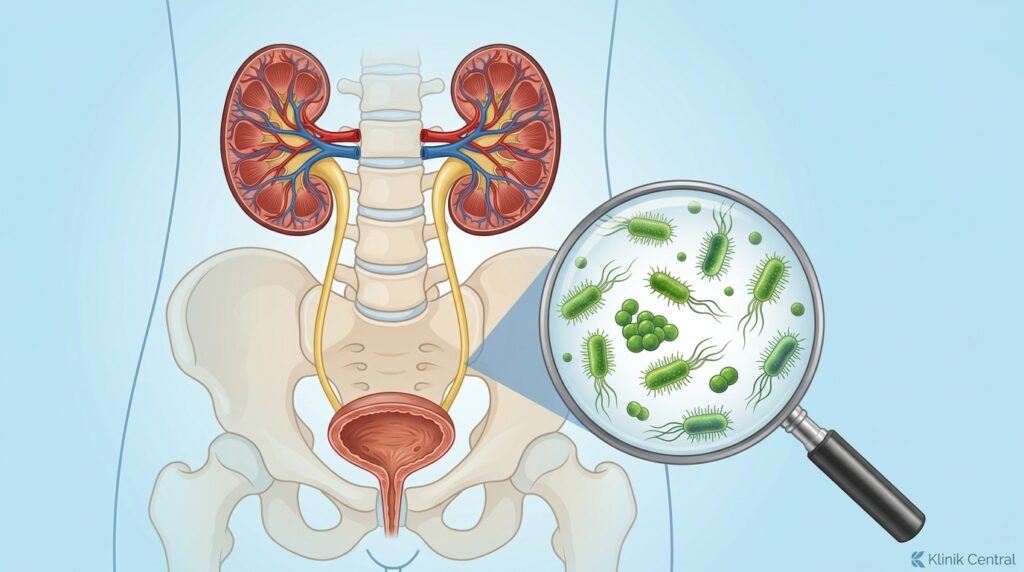
UTI symptoms commonly include burning or pain when passing urine, needing to urinate more often, or feeling the sudden urge to urinate. A urinary tract infection (UTI) can affect the bladder, urethra or kidneys, and symptoms can vary depending on which part of the urinary tract is involved
Since urinary symptoms can also occur with other conditions, medical assessment may be needed to determine whether a urine test or treatment is appropriate.
What Is a UTI?
A urinary tract infection, commonly called a UTI, is an infection affecting part of the urinary tract.
The urinary tract includes:
- Kidneys
- Ureters
- Bladder
- Urethra
A UTI commonly affects the lower urinary tract, particularly the bladder. When an infection involves the kidneys, it can cause more serious symptoms and requires prompt medical assessment.
What Are the Common UTI Symptoms?
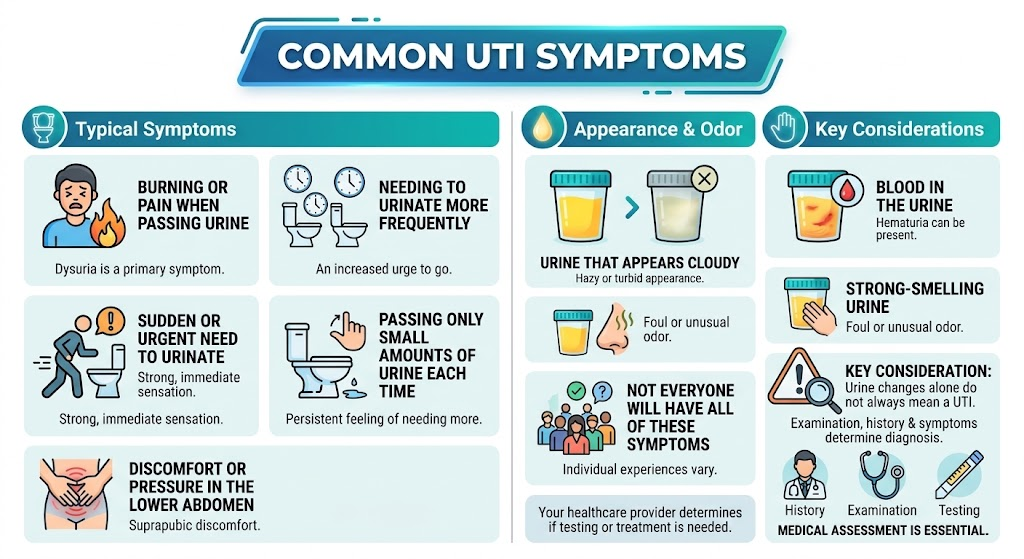
Common UTI symptoms may include:
- Burning or pain when passing urine
- Needing to urinate more frequently
- A sudden or urgent need to urinate
- Passing only a small amount of urine each time
- Discomfort or pressure in the lower abdomen
- Urine that appears cloudy
- Blood in the urine
- Strong-smelling urine
Not everyone will have all of these symptoms.
It is also important to remember that changes in urine alone do not always mean that a person has a UTI. Your symptoms, medical history and examination help determine whether further testing or treatment is needed.
What Causes a UTI?
Most UTIs occur when bacteria enter the urinary tract through the urethra and multiply.
UTIs are more common in women because the female urethra is shorter, making it easier for bacteria to reach the bladder.
Factors that may increase the risk of UTI include:
- Previous or recurrent UTIs
- Sexual activity
- Use of certain contraceptive methods, such as spermicides
- Pregnancy
- Urinary tract abnormalities
- Difficulty emptying the bladder
- Urinary obstruction or kidney stones
- Urinary catheter use
- Certain chronic medical conditions
Having one or more risk factors does not necessarily mean that you will develop a UTI.

UTI in Women
Women are more commonly affected by UTIs than men.
If you experience typical urinary symptoms such as burning when passing urine, increased frequency or urgency, it is worth getting assessed, particularly if symptoms are new or persistent.
UTI symptoms can sometimes overlap with other conditions, including vaginal infections and some sexually transmitted infections. If you also have vaginal discharge, itching, genital sores or other unusual symptoms, tell your doctor so that the appropriate assessment can be performed.
UTI in Men
UTIs can occur in men, but urinary symptoms in men may require more careful assessment because other conditions can cause similar symptoms.
For example, urinary symptoms may be associated with prostate problems, urinary obstruction, stones or other urinary tract conditions.
Men with suspected UTI should seek medical assessment rather than simply taking leftover antibiotics or using antibiotics prescribed for someone else.
Read our Men’s Health 101: Essential STI Screening Guide to learn more about the connection between UTIs and STIs.
How Is a UTI Diagnosed?
A doctor may assess a suspected UTI based on your symptoms, medical history and physical examination.
A urine test may be recommended depending on the situation.
Urinalysis
A urine test can look for findings that may support a urinary tract infection, such as white blood cells, red blood cells or other changes.
However, a urine test result should be interpreted together with the patient’s symptoms and clinical findings.
Urine Culture
A urine culture can identify bacteria growing in the urine and may help determine which antibiotics are likely to work.
Urine culture is particularly important in situations where there is a higher risk of complicated infection, recurrent infection, treatment failure or other clinical concerns.
Do All UTIs Need Antibiotics?
Not every abnormal urine result means that antibiotics are required.
The Malaysian Ministry of Health emphasises appropriate antimicrobial use as part of efforts to reduce antimicrobial resistance. The current National Antimicrobial Guideline (NAG) 2024 is the national reference for appropriate antimicrobial treatment.
Some people may have bacteria in their urine without having symptoms. This is known as asymptomatic bacteriuria. KKM guidance indicates that this should not routinely be treated with antibiotics in most people, with important exceptions such as pregnancy and certain urological procedures.
For this reason, antibiotics should not be started simply because bacteria or abnormalities are found in a urine sample without considering the patient’s symptoms and clinical situation.
How Is a UTI Treated?
Treatment depends on several factors, including:
- The location and severity of the infection
- The patient’s symptoms
- Age and sex
- Pregnancy status
- Previous UTIs
- Other medical conditions
- Kidney function
- Previous antibiotic use
- Local antibiotic resistance patterns
- Urine culture and susceptibility results when indicated
When antibiotics are appropriate, the doctor will select an antibiotic and treatment duration based on the clinical situation and relevant guidelines.
It is important to take antibiotics exactly as prescribed and not to share antibiotics with other people or use leftover antibiotics from a previous illness.
Can You Treat a UTI at Home?
If you have mild urinary symptoms, staying adequately hydrated and getting medical advice can be appropriate while arranging an assessment.
However, home measures should not be used to delay medical care when symptoms are severe or worsening.
Drinking more water may help maintain hydration, but it should not be considered a replacement for appropriate treatment when a bacterial UTI requires medical management.
When Should You See a Doctor for UTI Symptoms?
You should seek medical assessment if you have symptoms that may indicate a UTI, particularly if they are persistent, severe or recurrent.
Prompt assessment is especially important if you develop:
- Fever or chills
- Pain in the back or side
- Nausea or vomiting
- Blood in the urine
- Significant weakness or feeling very unwell
- Symptoms that are getting worse
- Symptoms that do not improve with treatment
These symptoms may indicate an infection involving the upper urinary tract, such as the kidneys, which can require more urgent treatment.
Pregnant women with suspected UTI should also seek medical assessment because UTIs during pregnancy require specific management. KKM has dedicated guidance for the management of UTI in pregnancy.
Can UTIs Come Back?
Yes. Some people experience recurrent UTIs.
If you repeatedly develop urinary infections, your doctor may review possible contributing factors and determine whether further investigation or a prevention strategy is appropriate.
Recurrent UTI should not simply be managed by repeatedly taking antibiotics without assessing the underlying situation.
How Can You Reduce Your Risk of UTI?
Some practical measures may help reduce the risk of urinary infections:
- Drink enough fluids to maintain good hydration.
- Avoid regularly holding your urine for long periods.
- Empty your bladder when you feel the need to urinate.
- Maintain good personal hygiene.
- For women, wipe from front to back after using the toilet.
- Discuss recurrent UTIs with your doctor rather than repeatedly self-treating with antibiotics.
Not every UTI can be prevented, even when good hygiene and healthy habits are followed.
UTI vs Kidney Infection: What Is the Difference?
A bladder infection usually causes symptoms such as:
- Burning when passing urine
- Urinary frequency
- Urinary urgency
- Lower abdominal discomfort
A kidney infection may cause more systemic symptoms, such as:
- Fever
- Chills
- Pain in the back or side
- Nausea or vomiting
- Feeling significantly unwell
If urinary symptoms occur together with fever, chills or pain around the back or side, seek medical attention promptly.
Frequently Asked Questions About UTI
Can a UTI go away on its own?
Some urinary symptoms may improve without antibiotic treatment, but you should not assume that a suspected bacterial UTI will resolve safely without assessment. The appropriate approach depends on your symptoms and individual risk factors.
Can men get UTIs?
Yes. Men can develop UTIs, although they are less common than in women. Urinary symptoms in men may also have other causes, so medical assessment is recommended.
Does cloudy urine always mean a UTI?
No. Cloudy urine alone does not confirm a UTI. Other factors and symptoms need to be considered.
Can a UTI cause blood in the urine?
A UTI can cause blood in the urine, but blood in the urine can also have other causes. If you notice visible blood in your urine, medical assessment is recommended.
Should I take leftover antibiotics for a UTI?
No. Antibiotics should be used only when appropriate and prescribed for your condition. Using leftover antibiotics can result in the wrong medication, inappropriate treatment or contribute to antibiotic resistance.
What urine test is used for a UTI?
Depending on the situation, a doctor may request a urinalysis and/or urine culture. A urine culture can identify the bacteria and help guide antibiotic selection when culture is indicated.
Key Takeaway
UTIs are common and can cause symptoms such as burning urination, urinary frequency and urgency. However, similar symptoms can occur with other urinary or genital conditions.
Early assessment can help determine whether you have a UTI, whether a urine test is needed and what treatment is appropriate. Antibiotics should be used responsibly and according to clinical assessment and current antimicrobial guidance.
If you have urinary symptoms, especially fever, back or side pain, vomiting, blood in the urine, pregnancy, recurrent infections or worsening symptoms, seek medical attention promptly.
Klinik Central provides medical consultation and assessment for patients with urinary symptoms at our clinics in SS15 and Taman Megah.