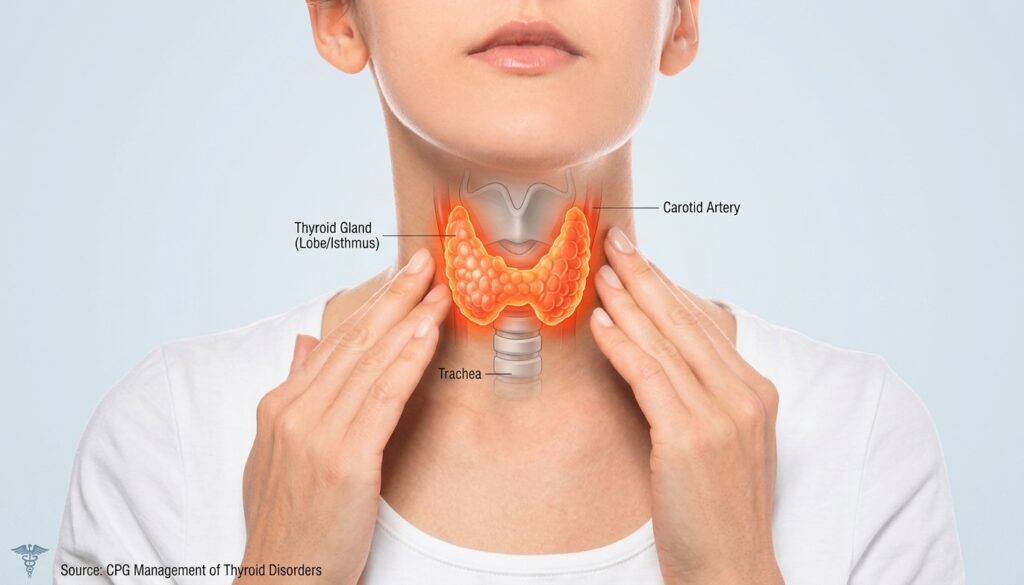
Thyroid problems can affect many parts of the body, from your energy levels and weight to your heart rate, mood and menstrual cycle. Because these symptoms can be subtle or mistaken for stress, ageing or lifestyle changes, thyroid conditions may sometimes go unnoticed.
The thyroid is a small, butterfly-shaped gland located at the front of the neck. It produces hormones that help to regulate the body’s metabolism and influence the function of many organs.
Two most common thyroid disorders are hypothyroidism, where the thyroid gland produces too little thyroid hormone, and hyperthyroidism, where it produces too much.
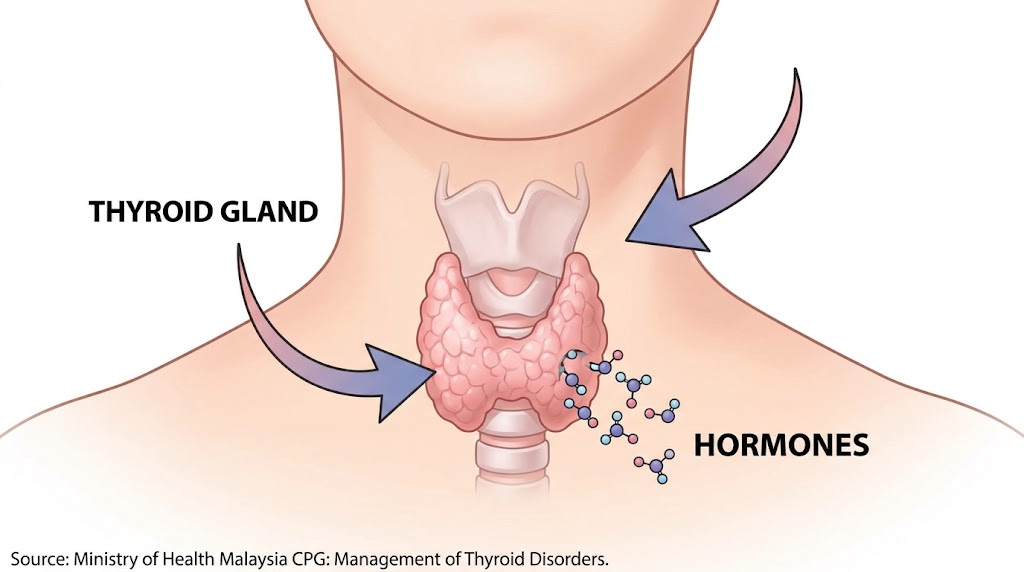
Source: Ministry of Health Malaysia CPG: Management of Thyroid Disorders
________________________________________________________________________________________________________________________
How Common Are Thyroid Problems?
In Malaysia, thyroid disorders affect approximately 3.4% of the population, making them the second most common endocrine issue after diabetes. Furthermore, women are 5 to 8 times more likely to develop thyroid problems than men, with about 1 in 8 women affected during their lifetime.
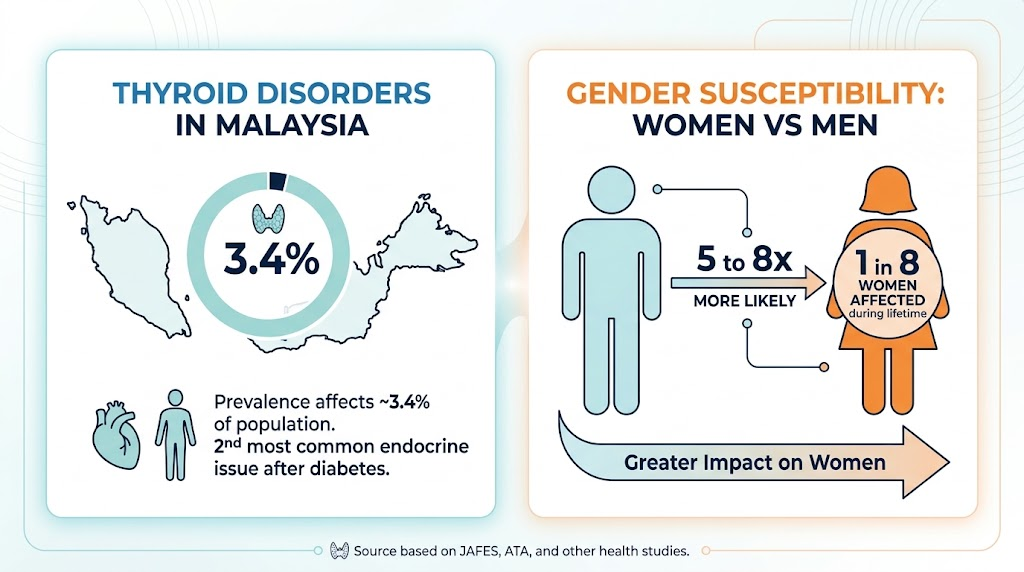
Source: Journal of the ASEAN Federation of Endocrine Societies (JAFES) and the American Thyroid Association (ATA).
________________________________________________________________________________________________________________________
What Are the Symptoms of Thyroid Problems?
The symptoms of thyroid problems vary depending on whether thyroid hormone levels are too low or too high. Having one of these symptoms does not necessarily mean you have thyroid disease, but persistent or unexplained symptoms should be assessed by a doctor.
1. Unexplained Weight Changes
Weight changes without a clear change in diet or physical activity may be associated with thyroid dysfunction.
- Hypothyroidism: weight gain may occur.
- Hyperthyroidism: weight loss may occur despite a normal or increased appetite.
2. Feeling Tired or Weak
Persistent tiredness, sluggishness or reduced energy can occur with hypothyroidism.
Hyperthyroidism can also cause tiredness and muscle weakness, particularly when the condition remains untreated.
3. Feeling Unusually Hot or Cold
Thyroid hormones help regulate metabolism and body temperature.
People with hypothyroidism may become more sensitive to cold, while those with hyperthyroidism may experience heat intolerance and increased sweating.
4. Noticeable Changes in Your Heartbeat
Hyperthyroidism can cause palpitations.
Persistent palpitations should be medically assessed, particularly when accompanied by chest discomfort, shortness of breath, dizziness or fainting.
5. Changes in Bowel Habits
Changes in thyroid hormone levels can affect the digestive system.
Constipation may occur in hypothyroidism, while more frequent bowel movements can occur in hyperthyroidism.
6. Mood, Sleep or Concentration Changes
Thyroid disorders may affect mental and emotional wellbeing.
Hypothyroidism can be associated with poor concentration, memory difficulties and low mood. Hyperthyroidism may cause nervousness, irritability, restlessness and difficulty sleeping.
These symptoms have many possible causes, so thyroid function should not be diagnosed based on symptoms alone.
7. Changes in Menstrual Periods
Thyroid dysfunction can affect menstrual patterns and reproductive health.
Women may notice changes in the frequency or amount of menstrual bleeding. Thyroid disorders are also particularly important to identify in women who are pregnant or planning pregnancy because appropriate thyroid hormone levels are important during pregnancy.
You can read more about Irregular Period Treatment in Malaysia: Expert Guide by Klinik Central for more information regarding changes in the menstrual periods.
8. Trembling Hands
A fine tremor, particularly involving the hands or fingers, may occur with hyperthyroidism.
It may appear together with symptoms such as palpitations, heat intolerance, sweating, anxiety or unexplained weight loss.
9. Swelling or a Lump in the Neck
An enlarged thyroid gland is known as a goitre.
A person may notice swelling at the front of the neck or discover a thyroid lump or nodule. Thyroid nodules are common and most are not cancerous, but they should still be appropriately assessed.
Seek medical attention if a neck swelling is growing, feels unusual, or is associated with changes in your voice or difficulty swallowing or breathing.
10. Changes in the Eyes
Some people with Graves’ disease, an autoimmune cause of hyperthyroidism, may develop thyroid eye disease.
Symptoms can include:
- Eye discomfort or irritation
- Excessive tearing
- Sensitivity to light
- Bulging or prominent eyes ( exophthalmos )
- Double vision
New or worsening eye symptoms should be discussed with a doctor.
________________________________________________________________________________________________________________________
Hypothyroidism vs Hyperthyroidism: What Is the Difference?
Hypothyroidism means the thyroid gland is underactive and does not produce enough thyroid hormone. Common features include tiredness, weight gain, constipation, cold intolerance and reduced concentration.
Hyperthyroidism means there is excessive thyroid hormone activity. It may cause weight loss, palpitations, sweating, heat intolerance, tremors, anxiety and more frequent bowel movements.
Symptoms alone cannot confirm either condition because many of these symptoms overlap with other health problems.
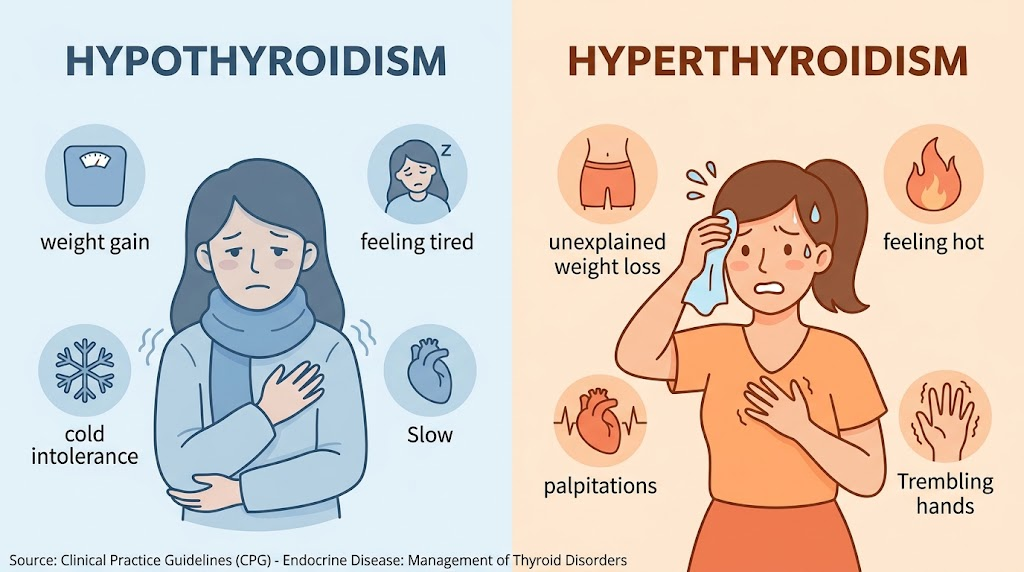
Source: Clinical Practice Guidelines(CPG) – Endocrine Disease Management of Thyroid Disorders
________________________________________________________________________________________________________________________
How Are Thyroid Problems Diagnosed?
If a thyroid disorder is suspected, your doctor will assess your symptoms, medical history and perform a physical examination.
According to Malaysian clinical practice guidance, serum thyroid-stimulating hormone (TSH) is an important initial test for assessing thyroid function. Depending on the clinical situation and TSH result, additional tests such as free thyroxine (free T4) and sometimes free triiodothyronine (free T3) may be required.
Further investigations may be considered depending on the suspected condition, including thyroid antibody testing or imaging for thyroid nodules.

________________________________________________________________________________________________________________________
When Should You See a Doctor?
Consider seeing a doctor if you experience persistent or unexplained:
- Unexplained weight gain or weight loss
- Tiredness or weakness
- Palpitations
- Tremors
- Heat or cold intolerance
- Changes in bowel habits
- Menstrual changes
- Neck swelling
- Presence of lump in front of the neck
- Eye symptoms
You should seek urgent medical attention for severe symptoms such as significant breathing difficulty, severe chest symptoms, fainting, marked confusion or a very rapid heartbeat.
________________________________________________________________________________________________________________________
Can Thyroid Problems Be Treated?
Yes. Treatment depends on the specific thyroid condition, its severity, the patient’s age, pregnancy status, other medical conditions and individual clinical circumstances.
Hypothyroidism is commonly treated with thyroid hormone replacement. Treatment options for hyperthyroidism can include antithyroid medication, radioactive iodine or surgery depending on the cause and individual circumstances.
The appropriate treatment should be determined by a doctor after confirming the diagnosis.
________________________________________________________________________________________________________________________
Frequently Asked Questions
What is usually the first blood test for thyroid problems?
TSH is generally an important initial thyroid function test. Free T4 and, in selected circumstances, free T3 may also be required depending on the clinical situation and TSH result.
Can I have a thyroid problem even if I feel healthy?
Yes. Some thyroid disorders, particularly mild or early disease, may cause few noticeable symptoms. Abnormal thyroid function may sometimes be identified during blood testing performed for another reason.
Does weight gain always mean I have hypothyroidism?
No. Weight gain has many possible causes. Hypothyroidism is only one possibility and cannot be diagnosed based on weight changes alone.
Can thyroid problems cause irregular periods?
Yes. Both hypothyroidism and hyperthyroidism can affect menstrual patterns. If menstrual changes persist, speak to a doctor about whether further assessment is appropriate.
Is a thyroid lump always cancer?
No. Most thyroid nodules are benign. However, a thyroid lump should be assessed to determine whether further investigation is needed.
Do I need a thyroid blood test if I am always tired?
Not necessarily. Tiredness has many causes, including inadequate sleep, anaemia and other medical conditions. A doctor can assess your symptoms and determine whether thyroid function testing or other investigations are appropriate.
________________________________________________________________________________________________________________________
Takeaway
Thyroid problems can sometimes cause symptoms that are easy to overlook. Unexplained weight changes, persistent tiredness, palpitations, temperature intolerance, menstrual changes or swelling in the neck may be reasons to speak to a doctor.
Recognising these changes early and obtaining the appropriate assessment can help identify thyroid disorders and allow suitable treatment to begin when necessary.
________________________________________________________________________________________________________________________